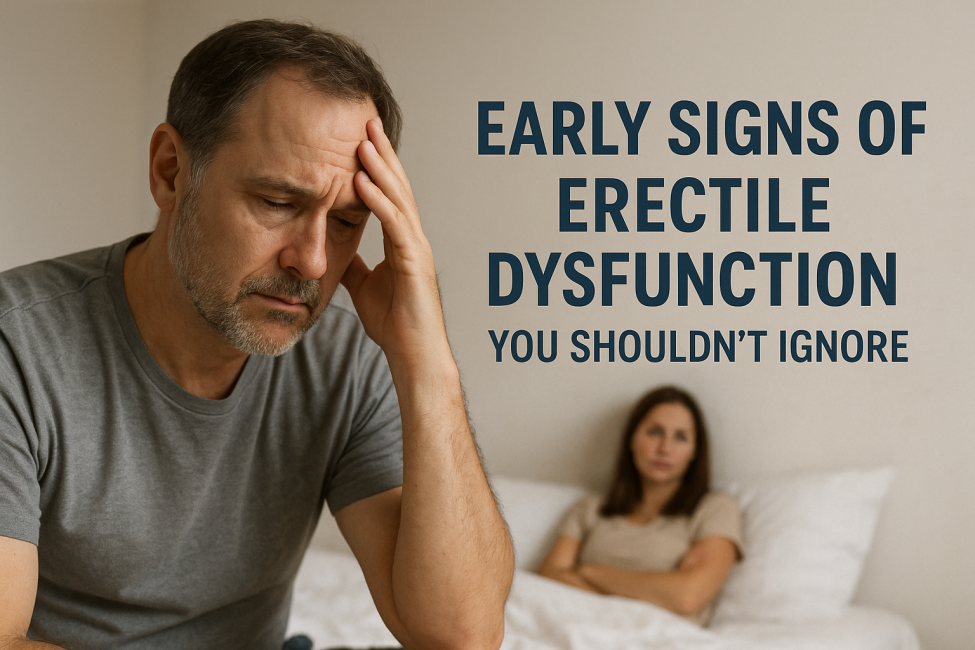
Erectile dysfunction (ED) is often treated as something men should quietly endure, but the early signs of erectile dysfunction are actually valuable health signals — not just sexual ones. Many men experience occasional difficulty, yet when these changes become persistent or progressive, they can point to deeper issues involving blood flow, hormones, stress, or chronic conditions like diabetes and heart disease. Understanding these early signs can help men seek help sooner, improve outcomes, and protect long-term health.
What Erectile Dysfunction Really Is
Erectile dysfunction isn’t simply the inability to get an erection. It includes a range of changes affecting sexual function, confidence, and physical performance. These changes can develop gradually, making it easy for men to dismiss them as fatigue, stress, or ageing. But clinically, any consistent pattern that affects sexual function for three months or more should be evaluated.
The Early Signs You Shouldn’t Ignore
1. Difficulty Achieving or Maintaining an Erection
The most recognisable early sign is struggling to achieve an erection or losing firmness sooner than expected. If this becomes a pattern rather than a one-off situation, it may reflect blood flow issues, low testosterone, stress, or medication side effects.
2. Reduced Morning Erections
Healthy morning erections (nocturnal penile tumescence) are an important marker of vascular and hormonal health. A noticeable reduction—either in frequency or firmness—can be an early sign of erectile dysfunction.
3. Lower Sexual Desire
A decline in libido often accompanies ED. While stress, fatigue, and relationship dynamics play a role, low libido can also indicate early hormonal imbalance, particularly low testosterone.
4. Erections That Don’t Feel as Firm
Men often notice a subtle shift in firmness before experiencing full erectile dysfunction. This early vascular change is important because it can be one of the first outward signs of heart and circulation problems.
5. Longer Time to Become Aroused
If it consistently takes more stimulation or longer time to achieve an erection, this may point to developing ED. Hormonal changes, early nerve dysfunction, or emotional stress can contribute.
6. Anxiety or Worry Around Sexual Performance
Psychological factors play a major role. Early erectile difficulties can trigger performance anxiety, which then worsens the problem. Growing fear, worry, or avoidance around sexual activity is another early sign.
7. Fatigue, Low Energy, or Mood Changes
These aren’t discussed often, but low energy, irritability, or mood shifts are early indicators of hormonal changes that can eventually affect sexual performance. In some cases, erectile dysfunction is the first visible sign of low testosterone.
What Causes Erectile Dysfunction?
Erectile dysfunction rarely has a single cause. It’s usually a combination of factors involving:
- reduced blood flow
- nerve supply issues
- hormonal imbalance
- psychological stress
- chronic medical conditions (e.g., diabetes, high cholesterol, high blood pressure)
Conditions affecting the heart and blood vessels are particularly important, as ED can appear 3–5 years before symptoms of cardiovascular disease. This is why taking the early signs seriously is crucial.
For a deeper understanding of cardiovascular links, also see our piece on How Blood Pressure and Cholesterol Affect Your Heart Health.
When You Should Seek Help
Men should speak to a healthcare professional if symptoms:
- persist for more than a few weeks
- worsen over time
- cause stress or relationship strain
- occur alongside reduced morning erections, low libido, or fatigue
The NHS recommends evaluation for all persistent erectile changes because ED can reveal underlying conditions like diabetes, hypertension, or heart disease.
How Erectile Dysfunction Is Treated
Treatment depends on the underlying cause and may include:
- lifestyle changes (exercise, sleep, stress management)
- medication such as PDE5 inhibitors
- improving heart health and blood pressure control
- hormone evaluation
- psychological therapy
- addressing alcohol, smoking, or medication side effects
Addressing the root cause is far more effective than only treating the symptoms.
The Bottom Line
The early signs of erectile dysfunction are not just about sexual performance—they are windows into a man’s overall health. Paying attention to these signals helps men take action early, protect long-term heart and metabolic health, and improve confidence and wellbeing. No man should struggle in silence; with early recognition and the right support, erectile function and general health can be significantly improved.
Sources
- NHS — Erectile Dysfunction: Diagnosis and Treatment
- American Heart Association — Erectile Dysfunction and Heart Disease
- Mayo Clinic — Erectile Dysfunction: Symptoms and Causes
- Harvard Health — Erectile Dysfunction and Cardiovascular Health
About the Author