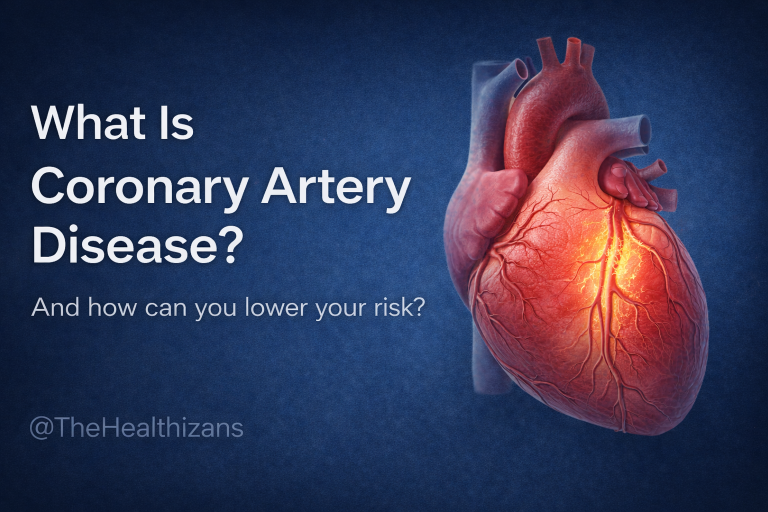
Coronary artery disease doesn’t appear overnight. It builds slowly and quietly, often giving small hints long before a heart attack occurs. Yet these early warning signs are easy to overlook — especially when life is busy or symptoms feel mild.
Because coronary artery disease remains one of the world’s leading causes of heart attacks, recognising these early clues can make a life-changing difference. And since conditions like high blood pressure and cholesterol directly influence how your arteries behave, it’s worth also reading our piece on How Are Blood Pressure, Cholesterol, and Heart Health Connected? to see how these risks overlap.
Understanding Coronary Artery Disease
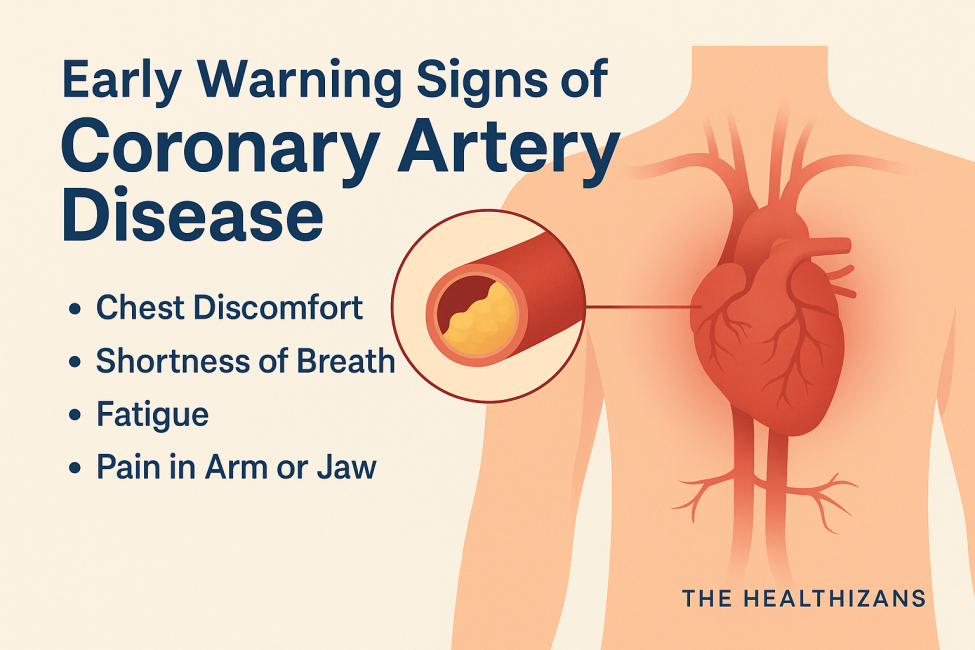
Your coronary arteries are responsible for delivering oxygen-rich blood to your heart muscle. When they become narrowed by cholesterol build-up (plaque), the heart receives less oxygen.
At first, the body tries to cope. You may feel “off,” tired, or mildly breathless — but nothing dramatic. That’s why these signs often get missed.
What follows are the subtle signals that deserve attention.
1. Chest Discomfort That Comes and Goes
This isn’t always the dramatic, crushing pain seen in films. Many people feel:
- pressure
- tightness
- heaviness
- or a dull ache
It often appears during activity — walking quickly, climbing stairs, carrying shopping — and eases with rest. Some mistake it for indigestion, delaying early treatment.
2. Unexplained Shortness of Breath
Feeling breathless during activities you usually handle with ease can be an early sign that the heart isn’t receiving enough blood.
For some people, breathlessness appears even without chest pain, making it easy to overlook.
3. Sudden or Unusual Fatigue
Fatigue related to coronary artery disease is different.
It’s persistent and out of proportion to what you’ve done.
This pattern is particularly common in women, who may feel:
- exhausted after mild activity
- unable to complete usual routines
- drained even after a full night’s sleep
This isn’t “normal tiredness.”
4. Discomfort in Other Parts of the Body
Reduced blood flow to the heart can create pain that spreads to:
- the left arm
- the neck or jaw
- the upper back
- or the area between the shoulder blades
Many people do not associate these areas with heart problems, which delays seeking help.
5. Feeling Light-headed, Nauseous, or Sweaty
When the heart struggles, the body triggers a stress response. People often describe feeling:
- faint
- dizzy
- clammy
- nauseous
- or unusually anxious
These sensations may come on suddenly or during routine activities.
6. “Silent” Symptoms — Especially in Diabetes
Some people experience silent ischaemia, where the arteries are significantly narrowed but symptoms are very mild. This is common in those with diabetes, whose nerve sensitivity is reduced.
Instead of chest discomfort, they may only feel:
- mild breathlessness
- vague discomfort
- or sudden tiredness
Regular check-ups are essential for high-risk groups.
When These Symptoms Become an Emergency
Call 999 immediately if you experience:
- persistent or worsening chest pain
- chest pain lasting more than a few minutes
- breathlessness that feels severe or sudden
- pain spreading to the jaw or arm
- fainting or extreme dizziness
Fast treatment can prevent long-term heart damage.
How to Protect Your Coronary Arteries
Reducing your risk is more achievable than most people realise. Start by:
- Keeping blood pressure well-controlled
- Managing cholesterol effectively
- Staying physically active
- Prioritising sound sleep
- Reducing stress
- Eating a heart-protective diet
- Quitting smoking
- Keeping up with regular check-ups
If you’re focusing on lifestyle improvements, our article on Best Exercises to Manage Blood Pressure offers simple routines to strengthen your cardiovascular system.
Final Thoughts
The early warning signs of coronary artery disease are often quiet, subtle, and easy to brush aside — but they matter. Listening to your body, especially when symptoms appear during activity, can prevent a future emergency.
Your heart rarely sends dramatic signals at first. It whispers.
Learning to notice these whispers is one of the most powerful forms of prevention.
Sources
- World Health Organization – Cardiovascular Diseases
- British Heart Foundation – Coronary Heart Disease
- NHS – Coronary Heart Disease Overview
- American Heart Association – Warning Signs of Heart Disease
About the Author