Prediabetes affects over 480 million adults worldwide, yet most people don’t even know they have it. That’s because the silent signs of prediabetes are often subtle, gradual, and easy to overlook — until blood sugar rises high enough to become type 2 diabetes.
The good news? Prediabetes is reversible with the right lifestyle changes. But recognising the warning signs early is the first step. In this guide, we break down the silent signs of prediabetes you shouldn’t ignore, using practical tips and evidence-based advice to help you stay ahead of your health.
(Also, check out our article on How to Prevent Blood Sugar Spikes After Meals, which provides helpful habits for stabilising glucose levels.)
🔍 What Exactly Is Prediabetes?
Prediabetes is when your blood sugar is higher than normal but not high enough to be diagnosed as type 2 diabetes.
It usually develops due to insulin resistance, meaning your body isn’t using insulin effectively. Without early intervention, up to 70% of people with prediabetes eventually develop type 2 diabetes.
⚠️ Silent Signs of Prediabetes You Shouldn’t Ignore
1️⃣ Constant Tiredness or Afternoon Fatigue – Feeling unusually drained — even after sleeping well — can be an early clue. When insulin isn’t working properly, your cells struggle to get energy from glucose.
2️⃣ Unusual Cravings After Meals – If you crave sugary or starchy foods within 1–2 hours after eating, this may signal unstable blood sugar and early insulin resistance.
3️⃣ Increased Thirst – Even mild elevations in blood sugar can trigger dehydration, making you drink more than usual — especially in the evening.
4️⃣ Always Feeling Hungry – If you keep feeling hungry soon after eating, your body may not be absorbing glucose efficiently. This is a common silent sign of prediabetes.
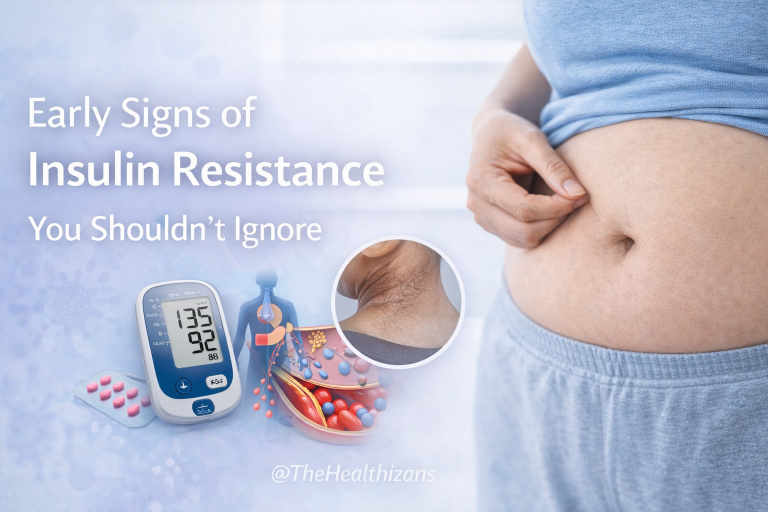
5️⃣ Unexplained Weight Gain (especially around the belly) – Central obesity is strongly linked to insulin resistance. If your waistline is increasing despite no major lifestyle changes, take note.
6️⃣ Poor Sleep or Waking Up Frequently – Blood sugar fluctuations can interrupt sleep cycles. If insomnia is new for you, it may be a metabolic red flag.
7️⃣ Slight Blurry Vision That Comes and Goes – Elevated glucose can temporarily change the shape of your eye lens. If vision blurs after meals, monitor it.
8️⃣ Dark, Velvety Patches on the Skin – Known as acanthosis nigricans, these patches typically appear on the neck, armpits, or knuckles — and often signal insulin resistance.
9️⃣ Brain Fog – Difficulty concentrating, forgetfulness, or slow thinking may be linked to fluctuating blood sugar levels.
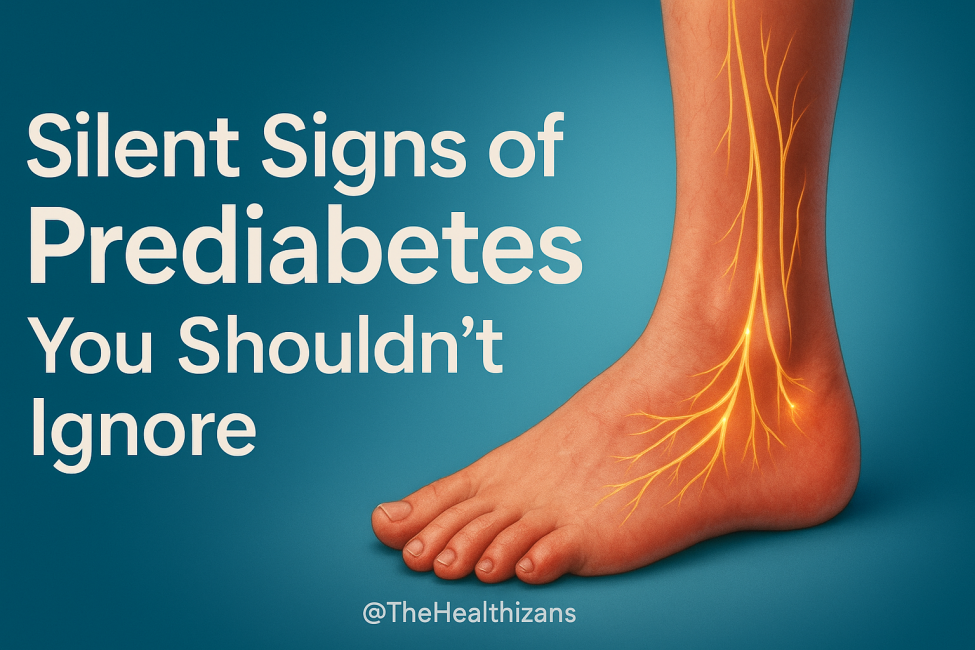
🔟 Tingling in Hands or Feet – Early nerve irritation can occur in prediabetes — long before full diabetic neuropathy develops.
🧪 When Should You Get Tested?
The NHS recommends screening if you:
- Are over 40 (or over 25 in some ethnic groups)
- Have a family history of diabetes
- Have high blood pressure or high cholesterol
- Are overweight, especially around the stomach
- Have ever had gestational diabetes
- Have PCOS (polycystic ovary syndrome)
A simple HbA1c test can confirm if you have prediabetes.
🌿 How to Reverse Prediabetes Naturally
The silent signs of prediabetes don’t have to lead to diabetes. These science-backed habits can help:
- 🥗 Eat lower-GI foods and add more fibre
- 🏃♀️ Move for 10 minutes after meals
- 💤 Prioritise good sleep
- 🧘♂️ Manage stress, which spikes blood sugar
- 💧 Stay hydrated
- 🥣 Choose balanced meals (see our Plate Method article)
Even a 5–7% reduction in body weight can significantly lower your risk.
🗣️ What’s Your Take?
Have you noticed any of these silent signs of prediabetes?
Share your experience — your story might help someone else catch it early.
📚 Sources
- World Health Organization — Diabetes Fact Sheet
- American Diabetes Association — Prediabetes: Risk & Prevention
- NHS — Type 2 Diabetes: Overview & Risk Factors
- Centers for Disease Control and Prevention (CDC) — National Diabetes Statistics Report
- Harvard Health Publishing — Insulin Resistance & Early Diabetes Symptoms
About the Author