🩸 Your Body Is Talking — Are You Listening?
Your body is always talking — the question is, are you listening?
Whether you’ve been diagnosed with diabetes, told you’re at risk, or never paid much attention to glucose levels, understanding the signs your blood sugar is too high or too low can make a real difference.
Blood sugar swings affect everyone, not just people with diabetes. They influence your energy, focus, mood, immunity, heart health, and even sleep quality. Recognising early warning signs helps you take control before silent imbalances lead to serious problems.
📊 Blood Sugar by the Numbers: Why It Matters
Let’s start with some perspective.
According to the International Diabetes Federation (IDF), more than 537 million adults around the world live with diabetes — nearly 1 in 10 people. The World Health Organization (WHO) adds that about one in three adults have raised blood sugar levels, and many don’t even know it.
The fastest rise is seen in low- and middle-income countries, where processed foods, stress, and sedentary habits are becoming part of daily life. These trends show that blood sugar imbalance isn’t just a medical issue — it’s a global health concern affecting millions silently.
🟥 When Blood Sugar Is Too High (Hyperglycaemia)
When blood sugar remains too high, glucose builds up in your bloodstream because your body doesn’t produce enough insulin — or because your cells stop responding properly to it.
Common Signs Include:
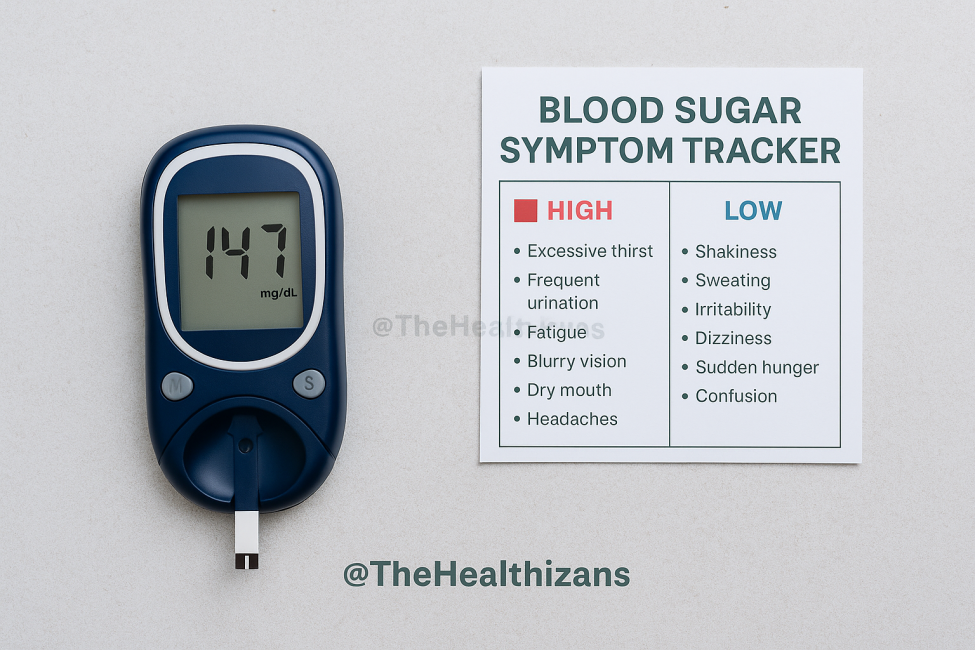
- Excessive thirst or dry mouth
- Frequent urination (especially at night)
- Blurred vision
- Persistent fatigue
- Headaches
- Slow-healing wounds or recurrent infections
- Itchy, dry skin
- Unexplained weight loss (in long-term cases)
High blood sugar can happen after large meals, stress, or illness. When it remains uncontrolled, it can quietly damage your heart, kidneys, nerves, and eyes.
💡 Learn more about how glucose works in our related article: Understanding Blood Sugar: What It Is and Why It Matters.
🟦 When Blood Sugar Is Too Low (Hypoglycaemia)
Low blood sugar, or hypoglycaemia, occurs when glucose drops below 70 mg/dL (3.9 mmol/L). This can happen if you skip meals, exercise too much, or drink alcohol without food. It’s most common in people taking insulin or glucose-lowering medication.
Warning Signs Include:
- Shakiness or trembling
- Sudden hunger
- Sweating (even when it’s cool)
- Dizziness or light-headedness
- Rapid heartbeat or palpitations
- Irritability, confusion, or anxiety
- Blurred vision
- Fainting or seizures (in severe cases)
Hypoglycaemia can escalate quickly — so if you suspect it, act fast. Have a glass of juice, a few glucose tablets, or a spoonful of honey, and recheck after 15 minutes.
🌍 Global Realities and Delayed Awareness
Across continents — from Lagos to London or Manila to Johannesburg — the body reacts to glucose swings the same way. But access to early testing, care, and information varies widely.
A 2022 Nigerian study revealed that more than half of newly diagnosed diabetes patients delayed seeking care until complications appeared. The same trend is seen in many developing regions, highlighting the importance of public awareness and routine screening.
🧠 What to Do If You Suspect a Blood Sugar Imbalance
If something feels “off,” don’t brush it aside — your body may be signalling a sugar imbalance.
What to Do:
1️⃣ Check your blood sugar if you have a glucometer.
2️⃣ If low (under 70 mg/dL or 3.9 mmol/L):
- Take 15g of fast-acting carbs such as juice, glucose tablets, or honey.
- Recheck after 15 minutes.
3️⃣ If high (over 180 mg/dL or 10 mmol/L after meals): - Hydrate and move gently, like taking a walk.
- Follow your doctor’s advice if you’re on medication.
4️⃣ If frequent or severe, speak to your healthcare provider promptly.
It’s not about one number — it’s about patterns. Regularly high or low readings, persistent symptoms, or lifestyle changes that affect your energy all deserve attention.
🧭 The Takeaway: Listen Before It’s Too Late
Signs your blood sugar is too high or too low often show up before a diagnosis. That mid-afternoon slump, excessive thirst, or random dizziness may be subtle clues your glucose is off-balance.
By paying attention to your body’s cues — and acting early — you can protect your heart, brain, and metabolism for years to come.
✨ Follow @TheHealthizans for more evidence-based tips on nutrition, prevention, and everyday health habits that keep your sugar story steady.
📚 Sources
- World Health Organization (2023). Global Report on Diabetes — Summarises global diabetes trends and prevention efforts, especially in developing regions.
- International Diabetes Federation (2021). IDF Diabetes Atlas – 10th Edition — Presents data showing how 1 in 10 adults worldwide are now living with diabetes.
- Mayo Clinic (2023). Blood Sugar Symptoms and When to Seek Help — Describes early warning signs of high and low blood sugar and when medical care is needed.
- NHS UK (2022). Understanding Diabetes Symptoms and Diagnosis — Offers NHS guidance on identifying and managing blood sugar-related conditions.
- Nigerian Journal of Endocrinology (2022). Delayed Presentation in Type 2 Diabetes Diagnosis — Examines late diagnosis patterns and awareness gaps among new diabetes patients in Nigeria.
About the Author