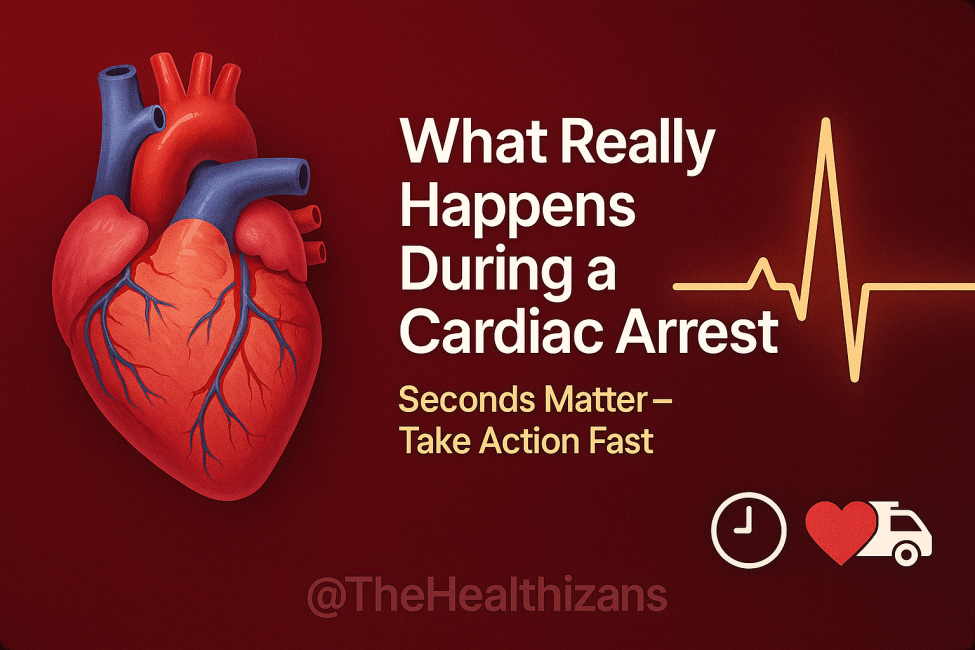
When a cardiac arrest strikes, it happens in seconds — someone suddenly collapses, stops breathing, and loses consciousness. The heart isn’t just “weak”; it has completely stopped pumping blood. But what’s really happening inside the body when this occurs? Let’s break it down.
💓 The Heart’s Electrical Symphony
Your heart beats around 100,000 times a day thanks to a finely tuned electrical system that tells the muscle when to contract. This keeps your blood circulating rhythmically throughout your body.
During a cardiac arrest, this rhythm suddenly malfunctions. Instead of a steady beat, the heart may:
- Quiver chaotically (ventricular fibrillation) – the electrical signals become so disorganised that the heart shakes instead of pumping blood effectively.
- Beat far too fast (ventricular tachycardia) – the lower chambers contract so rapidly that they can’t fill properly between beats, cutting off blood flow.
- Stop entirely (asystole) – the heart’s electrical activity flatlines, leaving the body with no circulation at all.
When this happens, the heart can’t pump blood to the brain, lungs, or other vital organs. Within seconds, oxygen levels crash — and the person collapses.
🫁 What Happens Inside the Body
Here’s what unfolds, moment by moment:
⏱ 0–10 seconds:
Blood flow stops instantly. The brain is deprived of oxygen, leading to sudden loss of consciousness. Muscles relax, and the person falls.
⏱ 10–60 seconds:
Breathing becomes irregular or stops completely. The skin may turn pale or bluish due to lack of oxygen, and pupils begin to dilate.
⏱ 1–4 minutes:
Without oxygen, brain cells start to die. The longer the delay before CPR, the higher the chance of irreversible brain injury.
⏱ 4–6 minutes:
Vital organs like the heart, liver, and kidneys begin shutting down. Survival chances drop roughly 10% for every minute without CPR or defibrillation.
That’s why every second counts — and why knowing what to do could save someone’s life.
🚑 How CPR and Defibrillation Help
Cardiopulmonary resuscitation (CPR) and defibrillation are the two most critical actions in a cardiac arrest:
- CPR keeps blood and oxygen moving.
Continuous chest compressions manually squeeze the heart, maintaining limited circulation to the brain and vital organs until professional help arrives. - Defibrillation resets the heart’s rhythm.
An automated external defibrillator (AED) delivers a controlled electric shock that can stop abnormal electrical activity, allowing the heart’s natural rhythm to restart.
When both steps are applied within minutes, survival rates can double or even triple.
💬 Also, check out our earlier post Cardiac Arrest vs Heart Attack: What’s the Difference? — it explains how these two conditions are connected but not identical.
🌿 Common Causes of Cardiac Arrest
While cardiac arrest can strike anyone — even healthy individuals — certain conditions and triggers increase the risk:
- Heart disease or previous heart attack – damage from blocked arteries can weaken the heart muscle and disrupt its electrical signals.
- Severe arrhythmias – irregular heartbeats, especially those originating from the ventricles, can trigger sudden collapse.
- Inherited heart conditions (e.g., Long QT syndrome) – genetic disorders affecting the heart’s electrical system make some people more prone to cardiac arrest.
- Electric shock or severe trauma – external shocks or major injuries can stop the heart’s rhythm abruptly.
- Drug overdose or electrolyte imbalance – certain substances (e.g. cocaine, opioids) or abnormal potassium and magnesium levels can disrupt heart function.
Understanding and managing these risks through regular check-ups, balanced nutrition, and healthy living are key preventive steps.
❤️ After Survival: What Recovery Involves
For those who survive cardiac arrest, the journey continues well beyond hospital discharge:
- Intensive care monitoring – doctors closely track heart rhythm, oxygen levels, and brain activity to prevent complications.
- Heart and brain rehabilitation – physiotherapy, speech therapy, and medication help rebuild strength and cognitive function.
- Emotional and psychological support – survivors and families often experience anxiety or post-traumatic stress; counselling can aid emotional healing.
Many survivors describe their recovery as a second chance at life, and with timely care, many return to work, exercise, and normal routines.
🧠 Final Takeaway
A cardiac arrest isn’t just a heart issue — it’s a whole-body emergency. The moment the heart stops, every organ begins to fight for oxygen.
Remember the life-saving chain:
Call 999 → Start CPR → Use an AED.
Quick, confident action saves lives — and it could be yours that makes the difference.
💡 Knowledge is power — and in this case, power means a pulse.
💬 What’s Your Take?
Have you ever witnessed CPR or seen a defibrillator used in public? What do you think every community should do to improve survival rates?
📚 Sources
- British Heart Foundation (BHF). Cardiac Arrest Explained.
- Resuscitation Council UK. CPR and AED Guidelines.
- NHS UK. Sudden Cardiac Arrest Overview.
About the Author