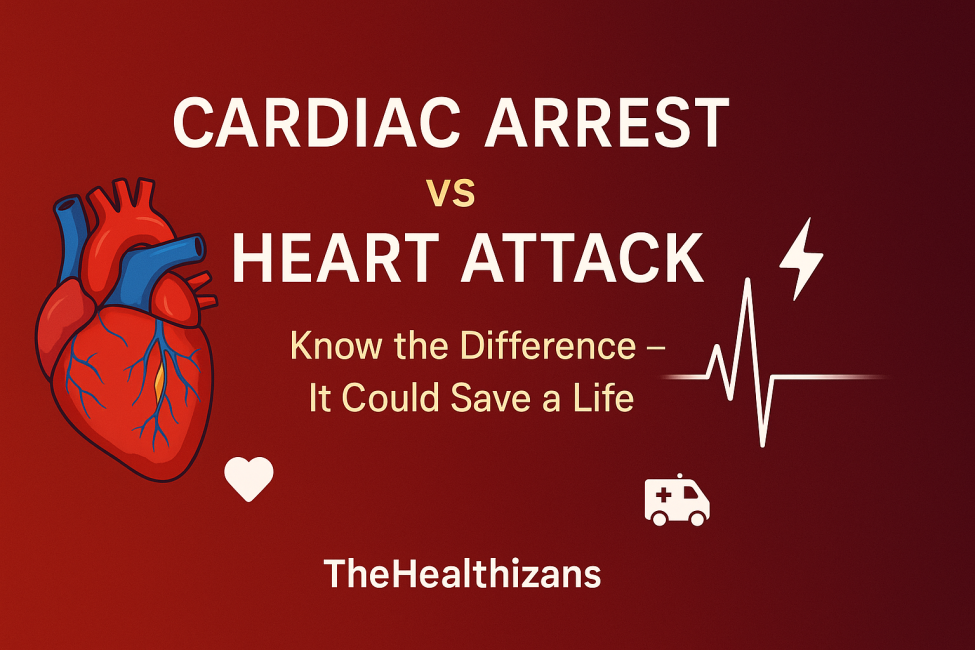
When someone suddenly collapses clutching their chest, most people call it a “heart attack.” But sometimes, that’s not what’s happening at all. It could be a cardiac arrest — a condition where the heart suddenly stops beating. Understanding the difference between the two could literally save a life.
💓 Heart Attack: A Circulation Problem
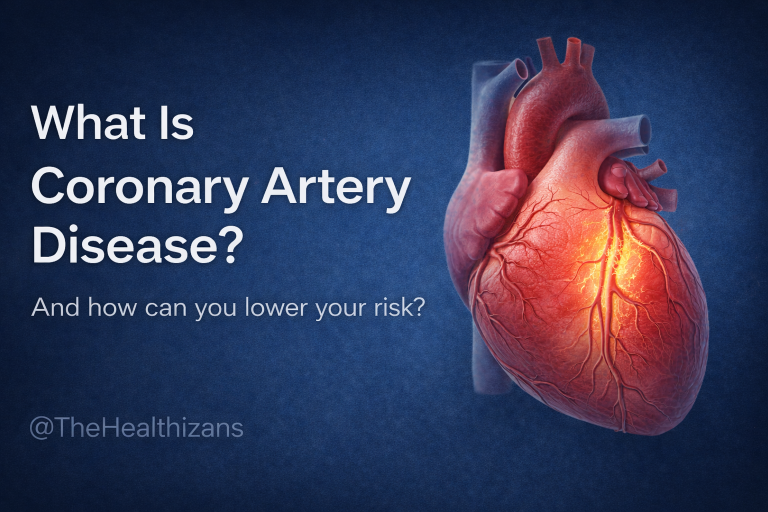
A heart attack (medically called myocardial infarction) happens when blood flow to part of the heart muscle becomes blocked — usually by a clot in one of the coronary arteries.
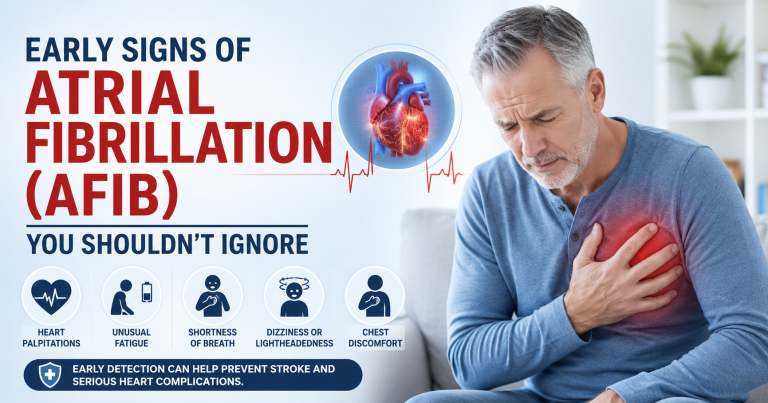
Without enough oxygen, the affected part of the heart begins to die. The person is often conscious, may feel severe chest pain, shortness of breath, nausea, or pain radiating to the arm, jaw, or back.
🩺 What to do:
- Call 999 immediately.
- Keep the person calm and seated upright.
- If they take aspirin or have GTN spray, help them use it (if prescribed).
- Stay with them until emergency help arrives.
💡 A heart attack doesn’t always cause a cardiac arrest — but it can trigger one if the heart’s rhythm becomes unstable.
⚡ Cardiac Arrest: An Electrical Breakdown
A cardiac arrest is an electrical problem. The heart’s rhythm suddenly goes haywire — it may quiver (ventricular fibrillation) instead of pumping blood. As a result, blood flow to the brain and other organs stops.
Unlike a heart attack, a person in cardiac arrest will:
- Suddenly collapse
- Become unconscious
- Stop breathing or have abnormal gasping
At this point, the clock is ticking. Without CPR, brain damage can begin within 3–4 minutes.
🚨 What to do:
- Call 999 immediately.
- Start chest compressions (hands-only CPR).
- Use a defibrillator (AED) if one is nearby — follow the voice prompts.
Every minute without CPR or defibrillation reduces survival chances by about 10%.
🔗 How They Connect
It’s important to know that a heart attack can lead to cardiac arrest if the damage triggers a fatal rhythm.
However, cardiac arrest can also occur without any blockage — for example, from:
- Arrhythmias (irregular heartbeats)
- Heart muscle disease
- Drug overdose
- Severe trauma
- Electrical shock
💬 Also, check out our article on Stroke Recovery & Prevention — another emergency where every second counts.
🫀 The Chain of Survival
Healthcare experts like the Resuscitation Council UK and British Heart Foundation (BHF) stress the “Chain of Survival” for cardiac arrest:
- Early recognition and call for help
- Early CPR
- Early defibrillation
- Post-resuscitation care
If more people understood these steps, survival rates could double across communities.
🌿 Final Takeaway
A heart attack is a plumbing problem.
A cardiac arrest is an electrical problem.
Knowing the difference — and what to do in each case — turns bystanders into potential lifesavers. So, next time you see someone collapse, don’t panic — call, push, shock, and save. ❤️
💬 What’s Your Take?
Have you ever witnessed a cardiac emergency or learned CPR at work? Share your experience — your comment might encourage someone else to get trained!
📚 Sources
- British Heart Foundation (BHF). What’s the difference between a heart attack and a cardiac arrest?
- Resuscitation Council UK. The Chain of Survival.
- NHS UK. Heart Attack and Cardiac Arrest Overview.
About the Author