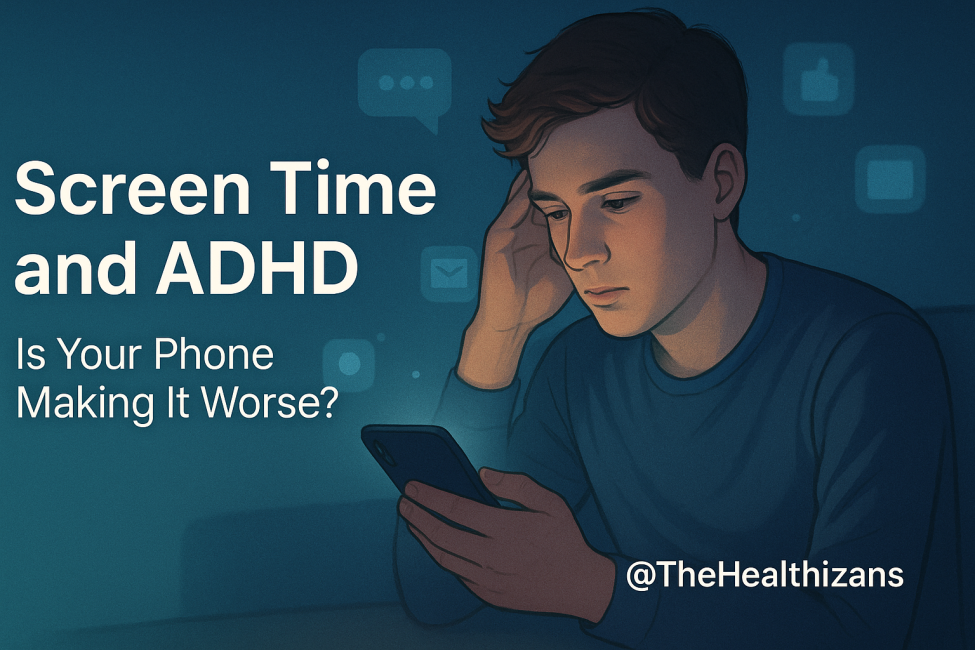
In today’s digital world, screens are everywhere — from homework tablets to smartphones and gaming consoles. But for children and adults living with ADHD, excessive screen time can make focusing, sleeping, and regulating emotions even harder.
Studies suggest that high screen time and ADHD symptoms are strongly linked. Children with ADHD often find it difficult to disengage from stimulating apps, while adults may experience constant distractions that worsen time management and attention.
However, it’s not all bad news. With mindful use and the right boundaries, technology can become a helpful tool rather than a trigger.
🧠 How Screen Time Affects the ADHD Brain
People with ADHD naturally seek stimulation — their brains crave novelty and quick rewards. Unfortunately, that’s exactly what modern screens provide:
- Fast-paced notifications
- Endless scrolling
- Bright colours and sounds that release dopamine
This short-term dopamine “rush” can create a feedback loop, making it harder for the brain to focus on tasks that feel less exciting — like studying, chores, or paperwork.
According to a 2024 meta-analysis published in JAMA Network Open, children who spend more than 3 hours daily on screens are significantly more likely to show symptoms of inattention and hyperactivity [Source 1 below].
😴 The Hidden Cost: Sleep and Emotional Regulation
Excessive evening screen time interferes with melatonin production — the hormone that regulates sleep. Blue light from phones and tablets delays sleep onset and reduces sleep quality, which can worsen ADHD symptoms the next day.
Inconsistent sleep patterns are a known trigger for irritability and poor concentration in people with ADHD. And since both sleep deprivation and ADHD affect the same brain circuits responsible for focus and mood, the effects compound over time.
🧘♀️ Finding the Right Balance
Reducing screen time doesn’t have to mean cutting out technology entirely. Instead, it’s about creating mindful digital habits:
- Set Tech-Free Zones: No phones at the dinner table or during bedtime routines.
- Use Built-In Limits: Enable “Focus” or “Downtime” features on devices.
- Encourage Active Screen Use: Prefer creative activities (drawing apps, coding games) over passive scrolling.
- Schedule Screen Breaks: Apply the 20–20–20 rule — every 20 minutes, look away from the screen for 20 seconds, 20 feet away.
These habits also apply to adults. For instance, muting non-essential notifications during work hours can dramatically reduce distraction fatigue.
📚 Turning Tech into an ADHD Ally
Surprisingly, technology can also support ADHD management when used wisely:
- Pomodoro and Focus Apps (like Forest or Focus Keeper) promote time-blocked concentration.
- Digital planners help with reminders and organisation.
- Mindfulness apps (like Headspace) teach calming and breathing techniques.
Also, check out our article on Mindfulness for ADHD: Can Meditation Really Improve Focus? — it expands on how simple mindfulness habits can retrain attention naturally.
👨👩👧 Practical Tips for Parents
For children, co-viewing and shared routines work best:
- Watch shows together and discuss what’s happening.
- Avoid using screens as a reward or punishment.
- Encourage offline play to balance dopamine naturally — cycling, drawing, or outdoor exploration.
🌈 Final Thoughts
Screen time and ADHD don’t have to be enemies. The key is awareness, balance, and boundaries. When managed wisely, digital tools can empower learning, creativity, and connection — not chaos.
💬 What’s Your Take?
Do you or your child struggle to limit screen time? What strategies have worked for your family or workplace? Join the conversation with us @TheHealthizans
📚 Sources
- Christakis, D. A. et al. (2024). Screen Media Use and Attention Problems in Children: A Meta-Analysis. JAMA Network Open.
- World Health Organization (WHO). (2023). Guidelines on Physical Activity, Sedentary Behaviour and Sleep for Children Under 5 Years of Age.
- National Institute for Health and Care Excellence (NICE). (2018). Attention Deficit Hyperactivity Disorder: Diagnosis and Management (NG87).
- American Academy of Pediatrics (AAP). (2023). Media and Young Minds.
- Child Mind Institute. (2024). Technology and the ADHD Brain: What Parents Should Know.
About the Author