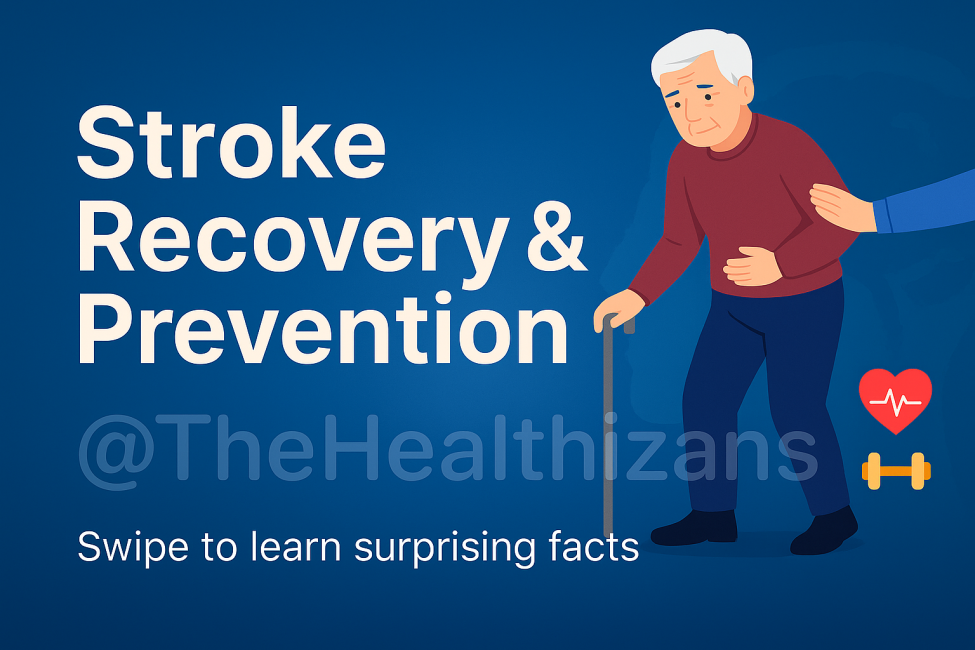
Surviving a stroke is just the beginning. Stroke recovery takes time, commitment, and the right care. Fortunately, adopting the right habits can help you recover faster and prevent another stroke. Every stroke is different, and so is every recovery. Some people may regain movement quickly, while others need months of therapy. The goal is to help your brain relearn lost skills and strengthen new neural connections.
💪 Step 1: Start Rehabilitation Early
Rehabilitation helps your brain rewire itself — a process called neuroplasticity.
Physical, occupational, and speech therapy can begin within days of hospital discharge.
To understand why acting quickly matters, revisit our related post on Mini-Stroke (TIA): The Warning You Can’t Ignore.
🏃 Step 2: Stay Physically Active
Gentle, regular movement boosts blood circulation, strengthens muscles, and supports mental health.
Start slowly with physiotherapist-guided exercises, then build up to light walking, stretching, or yoga.
🥗 Step 3: Eat for Brain and Heart Health
Nutrition plays a major role in stroke prevention.
- Eat plenty of vegetables, fruit, whole grains, and oily fish.
- Limit salt and processed foods to keep blood pressure steady.
For heart-protective foods, see our article Which Foods Naturally Protect Your Heart and Improve Circulation.
🩸 Step 4: Control Blood Pressure, Cholesterol, and Sugar
High blood pressure remains the top cause of both strokes and heart attacks.
Work closely with your doctor to monitor these numbers regularly.
For more insight, check our explainer on Why High Blood Pressure Is the Leading Cause of Stroke.
🧘 Step 5: Protect Your Mental Health
Stroke recovery isn’t only physical — emotional recovery matters too.
Joining a stroke support group, setting achievable goals, and staying connected with loved ones can reduce anxiety and depression.
🌍 Global Health Perspective
According to the World Health Organization, structured rehabilitation reduces stroke-related disability by up to 30%. The NHS also emphasises community-based support and continuity of care for lasting results. NHS data shows that early referral to multidisciplinary stroke teams — including physiotherapists and dietitians — improves mobility and independence rates within three months.
✅ The Takeaway
Recovery after a stroke is possible. By following medical guidance, maintaining a healthy lifestyle, and staying vigilant about your body’s warning signs, you can reclaim your strength and protect your future health.
💬 What’s Your Take?
If you’re supporting a stroke survivor or on your own recovery journey, share your experience below — your insight may help someone else take the next brave step.
📚 Sources (Outbound Links)
- NHS – Stroke Recovery and Rehabilitation
- World Health Organization – Stroke Burden and Prevention
- American Stroke Association – Life After Stroke
About the Author