Your eyes are remarkable — quietly working from the moment you wake until you sleep. Yet many people overlook the early warning signs of eye problems until it’s too late. Learning how to spot vision changes early can help you prevent long-term damage and protect one of your most valuable senses.
From blurry text and light sensitivity to subtle colour changes, your eyes often whisper before they shout. The sooner you listen, the better your chances of preserving clear, healthy vision for years to come.
🩺 Why Early Detection Matters
According to the World Health Organization (WHO), at least half of all vision loss worldwide is preventable or treatable if detected early. Conditions like glaucoma, diabetic retinopathy, cataracts, and age-related macular degeneration (AMD) often start quietly — without pain or obvious symptoms.
By recognising early signs and booking routine eye checks, you can catch issues before they cause irreversible damage. In children, early diagnosis can even save sight — as seen in rare conditions like Retinoblastoma: Causes, Signs, and Why Early Detection Saves Sight.
🔍 Common Early Signs of Vision Changes
Be alert for these subtle but important signals your eyes may send:
- Blurry or double vision — struggling to focus or needing to squint more often.
- Difficulty seeing at night — halos around lights or reduced clarity in dim settings.
- Frequent eye strain or headaches — often caused by uncorrected refractive errors or prolonged screen time.
- Changes in colour perception — colours appearing dull, faded, or distorted.
- Sudden flashes or floaters — could indicate retinal detachment and require immediate care.
- Uneven pupil reactions or white reflexes in photos — particularly important to check in children.
🕶️ Everyday Habits to Protect Your Vision
Your lifestyle has a direct impact on how your eyes age and perform. Fortunately, small consistent actions make a big difference:
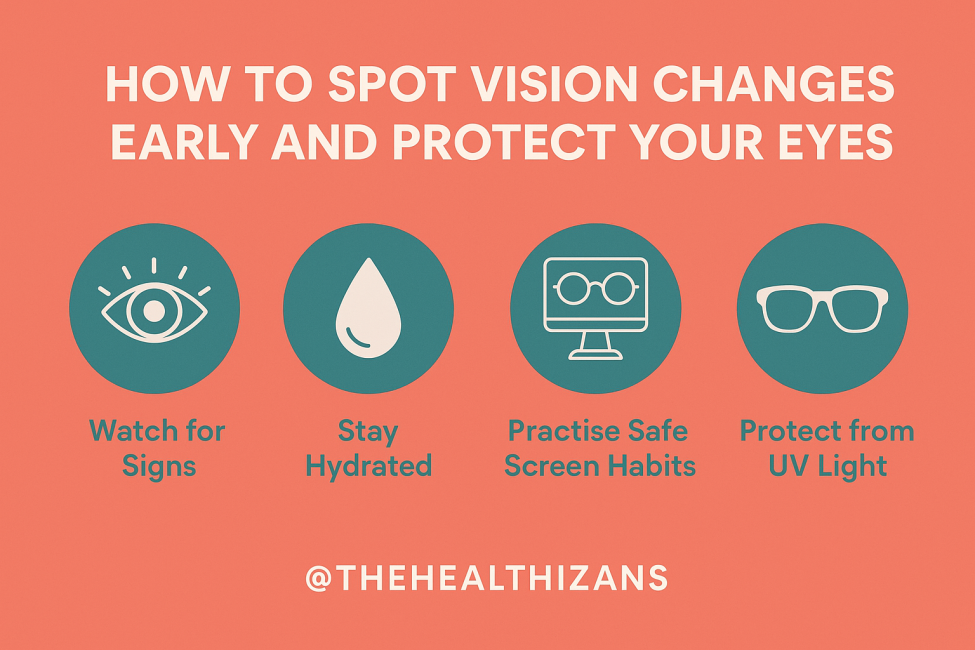
1. Stay Hydrated
Dry eyes can blur your vision and cause irritation. Drink enough water daily to maintain healthy tear production.
2. Eat for Your Eyes
Foods rich in vitamin A, C, E, and zinc — like carrots, spinach, citrus, and almonds — protect the retina from oxidative damage.
Also, omega-3 fats from salmon or flaxseeds support tear film and retinal health.
3. Practise Safe Screen Habits
Follow the 20-20-20 rule: every 20 minutes, look 20 feet away for 20 seconds. This reduces digital eye strain from long hours of computer use.
4. Protect from UV Light
Wear sunglasses that block 100% UVA and UVB rays, even on cloudy days. UV exposure increases cataract risk over time.
5. Get Enough Sleep
Your eyes need rest to replenish lubrication and process visual information. Aim for 7–9 hours of quality sleep each night.
🧠 Regular Eye Tests: Your Best Defence
Even if your vision seems fine, schedule routine eye examinations every 1–2 years (or as advised by your optometrist).
Eye exams don’t just check sight — they can also detect early signs of diabetes, hypertension, and neurological issues.
For children, early screening ensures normal visual development, while adults over 40 should monitor for glaucoma and macular changes more closely.
🌍 Global and NHS Perspective
- The NHS recommends regular eye tests at least every two years to detect early eye conditions before symptoms appear.
- Globally, WHO and the International Agency for the Prevention of Blindness (IAPB) highlight avoidable vision loss as a major public-health priority, encouraging accessible screening programmes and public education.
✅ Key Takeaways
- Knowing how to spot vision changes early empowers you to act before damage sets in.
- Watch for signs like blurred vision, light sensitivity, or white eye reflexes in photos.
- Protect your sight daily through hydration, balanced nutrition, screen care, UV protection, and adequate sleep.
- Regular check-ups remain your strongest safeguard against preventable blindness.
💬 What’s Your Take?
Have you ever noticed subtle vision changes that turned out to be something serious?
How often do you schedule your eye check-ups? Share your experience and inspire others to protect their vision with @TheHealthizans
📚 Sources
- NHS – Eye Tests and Eye Conditions
- World Health Organization – Vision Impairment and Blindness
- American Academy of Ophthalmology – Eye Health Tips
- International Agency for the Prevention of Blindness – Vision Atlas
About the Author