If you’ve ever pulled a muscle, twisted your ankle, or woken up with a stiff neck, you’ve probably wondered: “Should I use ice or heat?” 🤔
It’s one of the most common questions people ask after an ache, strain, or injury — and choosing correctly can make a big difference in how quickly you recover.
In this guide, you’ll learn when to use ice or heat for pain or injury relief, how each works inside your body, and the best way to combine them for faster recovery.
❄️ When to Use Ice (Cold Therapy)
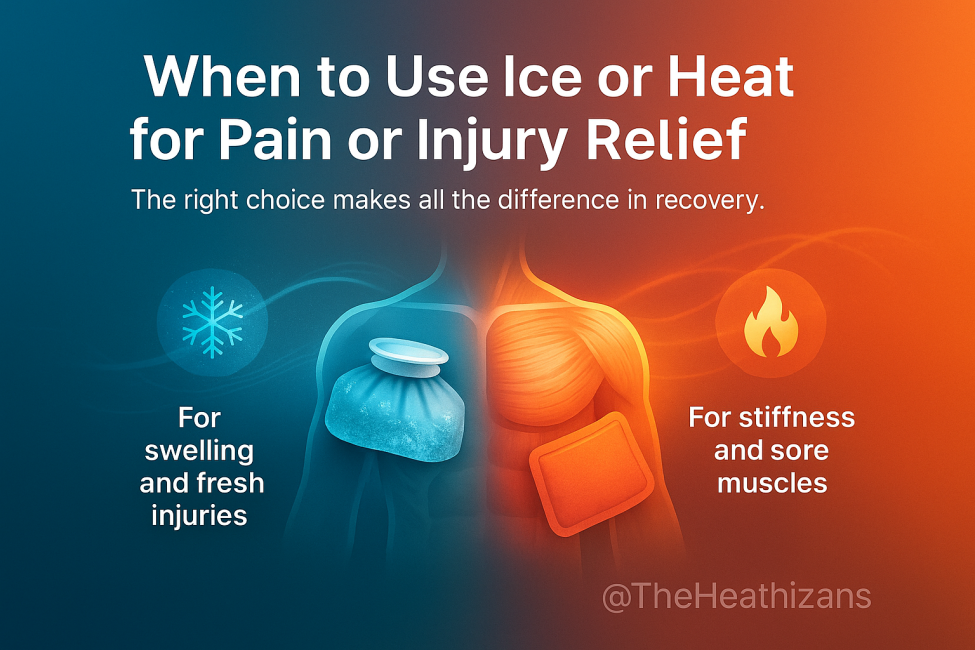
Let’s start with ice — your best friend for new or sudden injuries. Cold therapy, also called cryotherapy, is ideal for calming inflammation and swelling.
When an injury first happens, your blood vessels dilate, and fluid rushes to the area. This creates swelling and pain. Ice helps reduce blood flow, numb pain, and limit tissue damage.
🧊 Use Ice For:
- New injuries (within the first 48 hours)
- Swelling or inflammation (ankles, knees, or wrists)
- Bruises and sprains
- Throbbing, sharp, or hot pain
💡 Tip: Always wrap ice or a cold pack in a thin towel — never apply it directly to the skin to avoid ice burns.
How to apply:
Place an ice pack for 15–20 minutes, every 2–3 hours in the first two days.
Avoid ice if: you have poor circulation or nerve conditions — it might slow your body’s natural healing process.
🔥 When to Use Heat (Heat Therapy)
Once the swelling has gone down, it’s time to switch gears. Heat therapy helps your muscles relax, increase blood flow, and loosen stiffness — perfect for ongoing pain or tightness.
♨️ Use Heat For:
- Chronic pain (like arthritis or back pain)
- Tight or stiff muscles
- Menstrual cramps or tension headaches
- Post-workout soreness (after the initial 24–48 hours)
When you apply warmth, blood vessels open up, allowing oxygen and nutrients to flow freely. This helps speed up recovery and improve flexibility.
🌡️ Tip: A warm compress, heating pad, or even a warm bath can do the trick — but keep temperatures gentle, not scalding hot.
How to apply:
Use for 15–30 minutes, once or twice daily to ease stiffness and promote relaxation.
⚖️ Ice vs. Heat — Which One Should You Choose?
If you’re still unsure when to use ice or heat for pain or injury relief, here’s a simple guide:
| Condition | Use Ice | Use Heat |
| New injury (within 48 hrs) | ✅ | ❌ |
| Swelling or inflammation | ✅ | ❌ |
| Muscle stiffness or tension | ❌ | ✅ |
| Chronic pain or arthritis | ❌ | ✅ |
| Post-workout soreness | ✅ (first 24 hrs) → then heat | ✅ (after 24 hrs) |
🧠 Remember: Ice reduces inflammation, while heat promotes relaxation and healing. Both have their time and place — it’s all about timing.
🔄 Can You Alternate Between Ice and Heat?
Yes — and in some cases, this combination works wonders. Alternating between cold and heat improves circulation, reduces swelling, and eases muscle tension.
Example routine:
- Apply ice for 10 minutes to calm inflammation.
- Switch to heat for 15 minutes to boost circulation.
- Repeat once or twice daily if pain persists.
This method works particularly well for chronic back pain, neck tension, and repetitive strain injuries.
💬 Tip: Always end with heat — it leaves the muscles relaxed, not constricted.
🚫 When to Avoid Ice or Heat
There are times when neither is appropriate:
- Open wounds or infections – delay using either.
- Numb areas or poor sensation – you might not feel burns or frostbite.
- Diabetes or circulatory problems – check with your GP first.
When in doubt, seek medical advice — especially if pain is severe, persistent, or accompanied by swelling or bruising that doesn’t fade.
💡 Quick Takeaway
Think of it this way:
- 🧊 Ice = your body’s emergency brake — it stops swelling and numbs pain.
- 🔥 Heat = your body’s repair mode — it soothes stiffness and restores movement.
Knowing when to use ice or heat for pain or injury relief helps you recover faster and safer — without relying on unnecessary medication.
Small, consistent care leads to big results — keep moving, keep healing, and listen to what your body needs.
💬 What’s Your Take?
Do you prefer ice or heat when you’re sore or injured? What has worked best for you? Share your experience in the comments — your tip might help someone heal smarter.
📚 Sources
- NHS – Ice and Heat Therapy for Pain Relief
- Harvard Health – When to Use Ice or Heat for Injury Relief
- Cleveland Clinic – The Do’s and Don’ts of Ice and Heat Therapy
About the Author