When most people think about smoking, they picture its effects on the lungs or heart. But did you know that your mouth often shows the first warning signs? 🚬🦷
The truth about smoking and oral health goes far beyond yellow teeth or bad breath — it affects every part of your mouth, from the gums and tongue to the bones supporting your teeth.
And what’s more, those tiny changes in your mouth can reveal a lot about your overall health too.
🦷 How Smoking Affects Your Mouth
Every puff of smoke bathes your mouth in over 7,000 chemicals, many of which damage soft tissues and slow down healing. Here’s what typically happens inside your mouth:
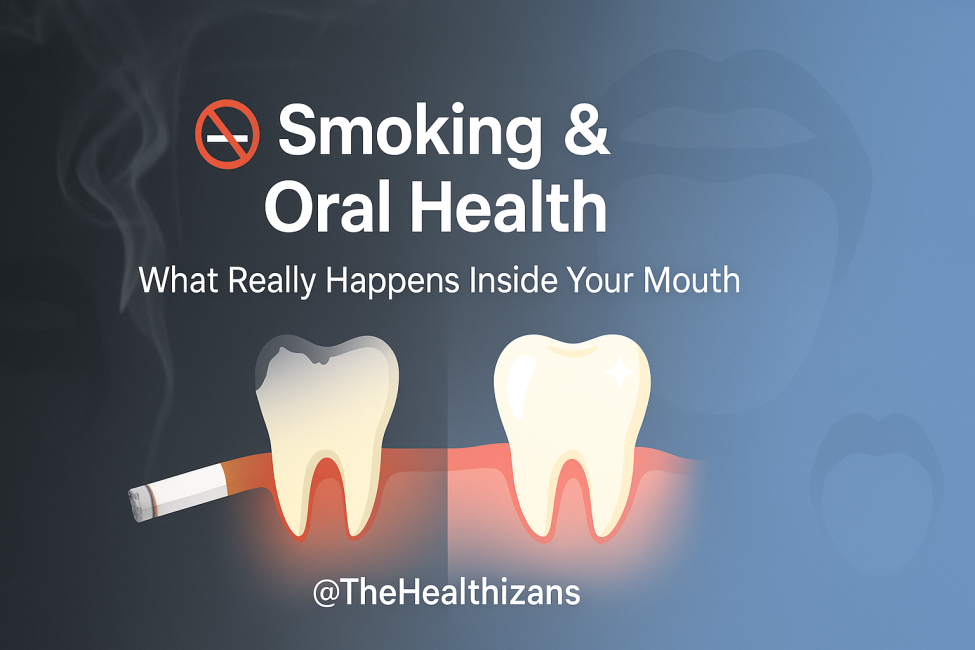
- Discoloured teeth – Nicotine and tar cling to enamel, turning it yellow or brown over time.
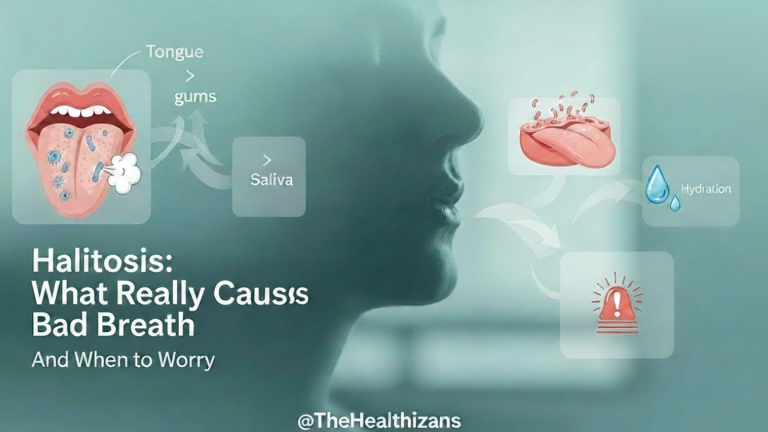
- Bad breath (halitosis) – Smoke dries your mouth and encourages bacteria growth.
- Reduced saliva – Less saliva means less natural cleansing, allowing plaque and decay to build up.
- Slow healing – Cuts, ulcers, and dental wounds heal slower because smoking restricts blood flow.
Over time, these effects weaken your oral defences — leaving your gums and teeth vulnerable to disease.
🌡️ Gums Under Attack: The Silent Damage
Smoking doesn’t just stain teeth — it starves your gums of oxygen and nutrients. This makes it harder for your body to fight infection, leading to periodontal (gum) disease, one of the biggest causes of adult tooth loss.
What’s tricky is that smokers may not notice early signs. Because nicotine narrows blood vessels, bleeding gums — a key early warning sign — may not occur. As a result, gum disease in smokers often goes unnoticed until it becomes severe.
Untreated gum disease doesn’t stop at the mouth; it allows bacteria and inflammatory chemicals to enter the bloodstream, potentially contributing to wider health issues like heart disease and stroke.
❤️ From Gums to Heart: The Bigger Health Picture
Your mouth is a mirror of your body. Studies have found that people with poor oral health due to smoking are more likely to have cardiovascular disease, respiratory problems, and certain cancers.
Toxins from cigarette smoke damage blood vessel linings, increase inflammation, and make it easier for harmful bacteria to move from your mouth to other organs.
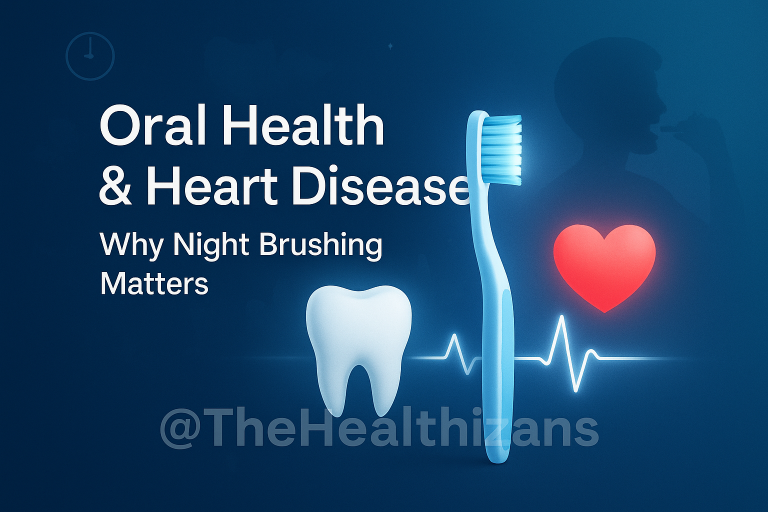
💡 This ties closely to what we discussed in our piece on Oral Health and Heart Disease: Why Night Brushing Matters — your gums and arteries are more connected than you might think.
🔄 Can Quitting Reverse the Damage?
The good news: your body begins to heal the moment you quit. Within weeks, your gums receive more oxygen, improving blood flow and healing capacity.
- Within 48 hours, your sense of taste and smell start returning.
- Within a few weeks, your gums stop deteriorating and inflammation subsides.
- After a few months, your breath improves, and new healthy tissue begins to form.
- Long-term, your risk of oral cancer and gum disease continues to fall — though it may take several years to reach that of a non-smoker.
💪 Tips to Protect Your Oral Health
✅ Quit smoking – It’s the single most effective step you can take.
✅ Brush twice daily – Use fluoride toothpaste to strengthen your enamel.
✅ Floss or use interdental brushes – Remove plaque between teeth.
✅ Stay hydrated – Water helps flush bacteria and keeps your mouth moist.
✅ Visit your dentist regularly – Routine check-ups can catch early signs before they worsen.
✅ Eat nutrient-rich foods – Vitamins C and D support gum health and healing.
Also, check out our guide on Smoking & Alcohol Reduction for practical ways to ease into a smoke-free lifestyle — your mouth (and your heart) will thank you.
💬 What’s Your Take?
Have you noticed changes in your oral health after cutting down or quitting smoking? Share your journey with @TheHealthizans community — your story might inspire someone else to make the same change!
📚 Sources
- NHS. Smoking and oral health. https://www.nhs.uk/live-well/quit-smoking/smoking-and-oral-health/
- CDC. How smoking affects your oral health. https://www.cdc.gov/tobacco/campaign/tips/diseases/oral-health.html
- Tonetti, M.S. et al. (2020). Treatment of periodontitis improves endothelial function: A meta-analysis. European Heart Journal.
- WHO. Tobacco and oral health factsheet. https://www.who.int/news-room/fact-sheets/detail/tobacco
- American Dental Association. The oral effects of tobacco use. https://www.ada.org
About the Author