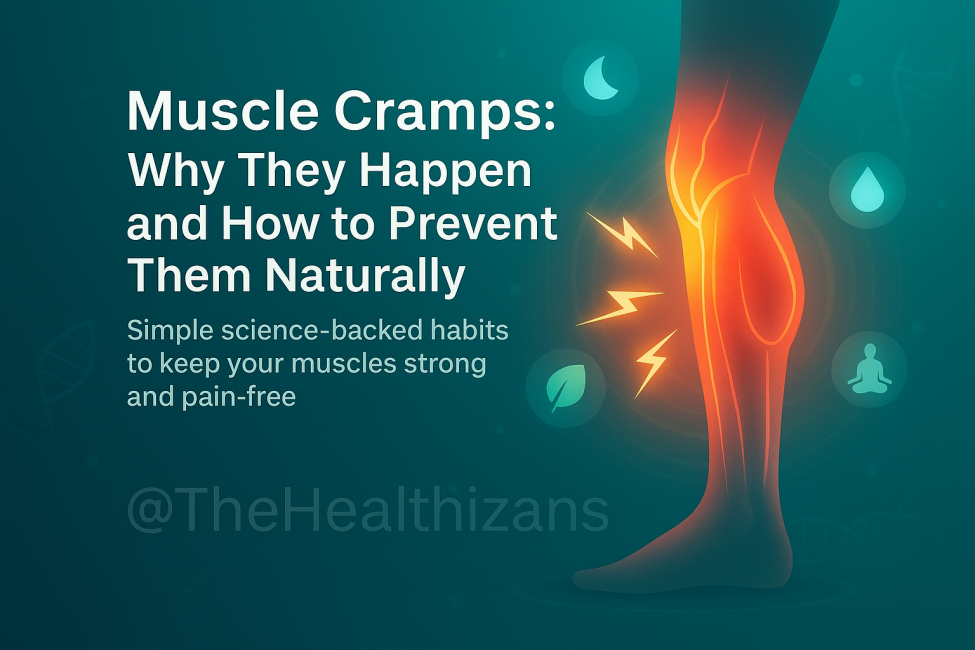
We’ve all been there — fast asleep or mid-workout, when suddenly your calf tightens like a knot and you freeze in pain.
That sharp, involuntary spasm? That’s a muscle cramp, and while it may seem harmless, it’s your body’s way of saying something’s off.
The good news? Once you understand why they happen, you can learn how to prevent muscle cramps naturally — and keep your body moving comfortably day and night.
🧠 What Exactly Are Muscle Cramps?
A muscle cramp is a sudden, involuntary contraction of a muscle that doesn’t relax immediately. It can last from a few seconds to several minutes and most often affects the calves, thighs, feet, or hands.
These cramps occur when the nerve controlling the muscle becomes overactive — sending signals to contract but not to release.
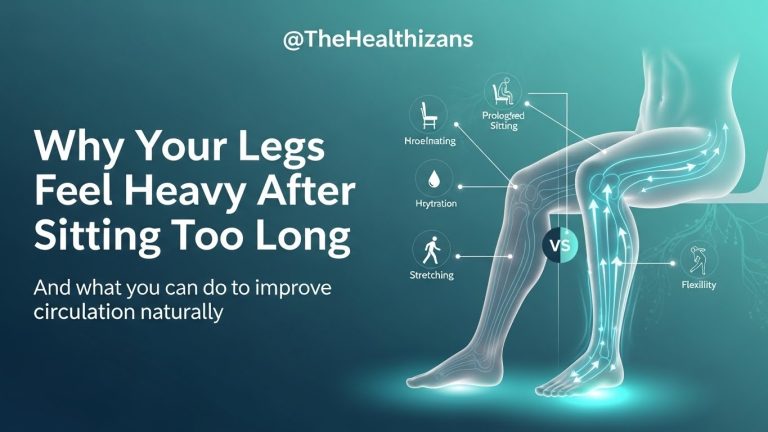
They’re common in athletes, older adults, and anyone who’s physically active (or even sitting too long without stretching).
⚡ Common Causes of Muscle Cramps
Muscle cramps can have several triggers — and most are lifestyle-related:
- Dehydration: Losing fluids and electrolytes (like sodium, potassium, and magnesium) disrupts muscle function.
- Overuse or Fatigue: Pushing muscles too hard, especially without stretching, can lead to spasms.
- Poor Circulation: Reduced blood flow means less oxygen and nutrients reach your muscles.
- Nerve Compression: Sometimes linked to back or spinal issues.
- Certain Medications: Diuretics and statins can sometimes cause cramps as side effects.
- Sleep Positioning: Night-time cramps can occur if muscles stay shortened for too long.
💡 Quick Fact: Muscle cramps are more common during hot weather or intense exercise because of fluid loss — your muscles literally “run out of balance.”
💆 What to Do When a Muscle Cramp Hits
When that painful knot strikes, here’s how to relieve it fast:
- Stretch gently: Flex the affected muscle slowly and hold for 20–30 seconds.
- Massage the area: Use firm circular motions to ease the tension.
- Apply heat: A warm towel or heating pad helps muscles relax.
- Cold packs: Reduce inflammation once pain subsides.
- Hydrate: Sip water or an electrolyte drink (coconut water works great).
🌙 For night cramps: Try flexing your foot upward or walking it off gently until the pain eases.
🥗 Natural Ways to Prevent Muscle Cramps
The best way to deal with cramps is to stop them before they start. Here’s how to prevent them naturally:
1. Stay Hydrated
Water keeps your muscles elastic and your nerves firing properly. Drink throughout the day — not just when you’re thirsty.
2. Eat Magnesium- and Potassium-Rich Foods
Nutrients like magnesium, calcium, and potassium help regulate muscle contraction.
- Great choices: bananas, spinach, avocados, almonds, and sweet potatoes.
3. Stretch Regularly
Tight muscles are more likely to cramp. Focus on calves, hamstrings, and quads — especially before bed or after exercise.
4. Keep Moving
If you sit or stand for long periods, flex your feet or take mini walking breaks every hour. Movement boosts blood flow and prevents stiffness.
5. Check Your Sleep Posture
Avoid pointing your toes downward in bed (it shortens calf muscles). Try sleeping with slightly bent knees or a pillow under them for support.
🧘 See also: How to Build Stronger Muscles and Recover Faster After Exercise — for tips on keeping your muscles healthy and cramp-free.
⚠️ When to See a Doctor
Occasional cramps are normal, but talk to your GP if:
- They happen often or severely.
- You notice weakness, tingling, or swelling.
- You’re on medications that might contribute to cramping.
Persistent cramps could be linked to circulation, nerve, or mineral imbalance issues that need proper review.
💡 Quick Takeaway
Muscle cramps are your body’s way of asking for better care — not punishment.
With hydration, balanced nutrition, gentle stretching, and rest, you can prevent most cramps naturally and keep your muscles working smoothly.
So, the next time your body tightens up, remember — it’s not just a cramp; it’s a call to stretch, nourish, and move mindfully.
💬 What’s Your Take?
Have you ever had leg cramps at night or during workouts? What helped you relieve them quickly? Share your tip below — your story could help someone else!
📚 Sources
- NHS – Muscle Cramps: Causes and Treatment
- Harvard Health – Why Muscle Cramps Happen
- World Health Organization – Physical Activity Guidelines
About the Author