💡 Why This Matters
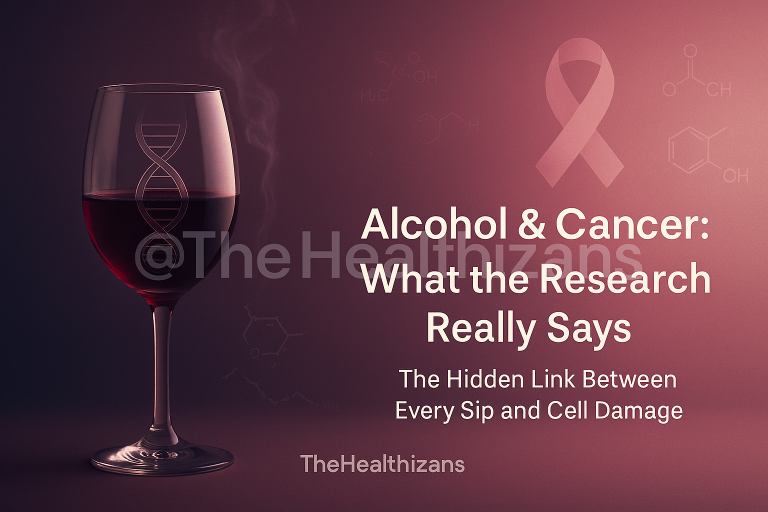
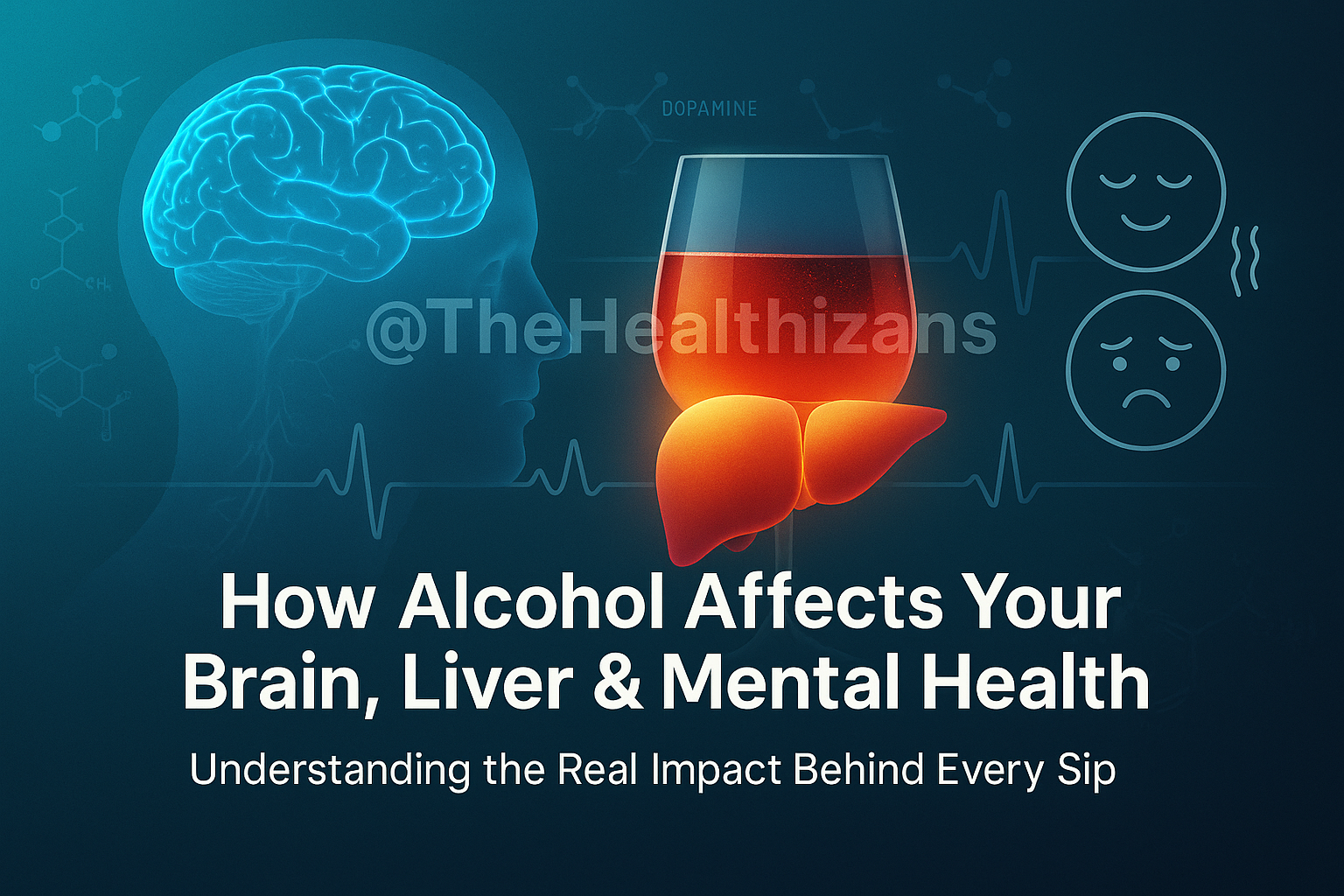
Alcohol is deeply woven into social life — from celebrations to quiet nights in. Yet, behind the toasts and laughter, there’s a complex science unfolding in your body every time you drink. Understanding how alcohol affects your brain, liver, and mental health helps you make more informed choices, especially if you think “a little” can’t hurt.
🧠 Alcohol and Your Brain: The Illusion of Relaxation
At first, alcohol feels like a relaxant — easing tension, lifting mood, and lowering inhibitions. However, what many don’t realise is that alcohol actually suppresses brain activity. It slows the communication between neurons, dulling your ability to think clearly and react quickly.
As you continue drinking, the brain’s chemical balance begins to shift. Alcohol boosts the release of dopamine — the “pleasure” chemical — which makes you feel happy or euphoric. But once the effect fades, dopamine levels drop, leaving you tired, low, or even anxious. Over time, repeated cycles of this imbalance can lead to alcohol dependence and mood swings that mimic depression.
This is also why, if you’ve ever experienced “hangxiety” (that anxious feeling after drinking), it’s not in your head — it’s your brain trying to recover its normal rhythm.
🫀 Alcohol and the Liver: The Body’s Detox Hero Under Strain
Every sip of alcohol is processed by your liver — the organ responsible for filtering toxins. When alcohol enters your system, your liver prioritises breaking it down over other tasks, producing a toxic byproduct called acetaldehyde.
With moderate drinking, the liver can usually handle this workload. But heavy or regular consumption overwhelms it, causing fat to accumulate in liver cells. This leads to fatty liver disease, which can progress to hepatitis (inflammation) and eventually cirrhosis — permanent liver scarring.
Because these changes often happen silently, people might not realise their liver is struggling until symptoms like fatigue, jaundice, or abdominal pain appear.
🧩 Alcohol and Mental Health: A Hidden Cycle
While many turn to alcohol for stress relief, in reality, it can make mental health challenges worse. Alcohol disrupts sleep cycles, blunts emotional regulation, and worsens anxiety and depression. What starts as a coping mechanism often becomes a trap — where the more you drink to “feel better,” the worse you feel when sober.
Interestingly, studies show that people who reduce alcohol intake report better mood, improved focus, and greater emotional stability within weeks. It’s proof that the mind can heal — but it needs the chance.
If you’re exploring healthier coping tools, check out our article Stress and Sleep: Breaking the Cycle — it explains how improving rest and stress control can naturally lift your mood without reaching for a drink.
🌿 The Good News: Your Body Can Recover
The body has an incredible ability to repair itself. When you reduce or stop drinking:
- Brain pathways begin to restore balance within days.
- Liver fat starts to decrease within weeks.
- Sleep, memory, and mood all improve with continued abstinence.
And unlike many other health changes, these benefits start surprisingly fast — often within the first month of cutting back. Whether it’s a full stop or a gradual reduction, every alcohol-free day counts.
✅ Final Word
Understanding how alcohol affects your brain, liver, and mental health is the first step toward change. The goal isn’t guilt — it’s awareness. By making small, conscious choices, you give your body the chance to heal, your mind the space to stabilise, and your health the freedom to flourish.
So next time you raise a glass, pause and think: is this drink serving you — or are you serving it?
💬 What’s Your Take?
Have you ever noticed changes in your mood or focus after drinking? Or perhaps you’ve tried cutting back and felt the difference? Share your story below 👇 — your experience could encourage someone else to start their journey toward balance.
📚 Sources
- World Health Organization (WHO): Alcohol Fact Sheet
- NHS: Alcohol and Your Health
- Centers for Disease Control and Prevention (CDC): Alcohol and Public Health
- Harvard Health: The Link Between Alcohol and Mental Health
- Liver Foundation: Effects of Alcohol on the Liver
About the Author