Living with Polycystic Ovary Syndrome (PCOS) isn’t just about managing periods or fertility — it’s also about caring for your whole body every day. If you haven’t yet, check out our PCOS 101: What You Need to Know article for a full introduction. In this piece, we’ll focus on how food and lifestyle choices can calm inflammation, balance hormones, and improve overall wellbeing.
🔥 PCOS and Inflammation: What’s the Link?
Research shows that women with PCOS often have low-grade chronic inflammation, which worsens symptoms such as insulin resistance, acne, fatigue, and even weight gain. Certain foods can either fuel this fire or help cool it down.
Think of your diet as a toolkit: every meal you eat has the power to nudge your hormones toward balance or imbalance.
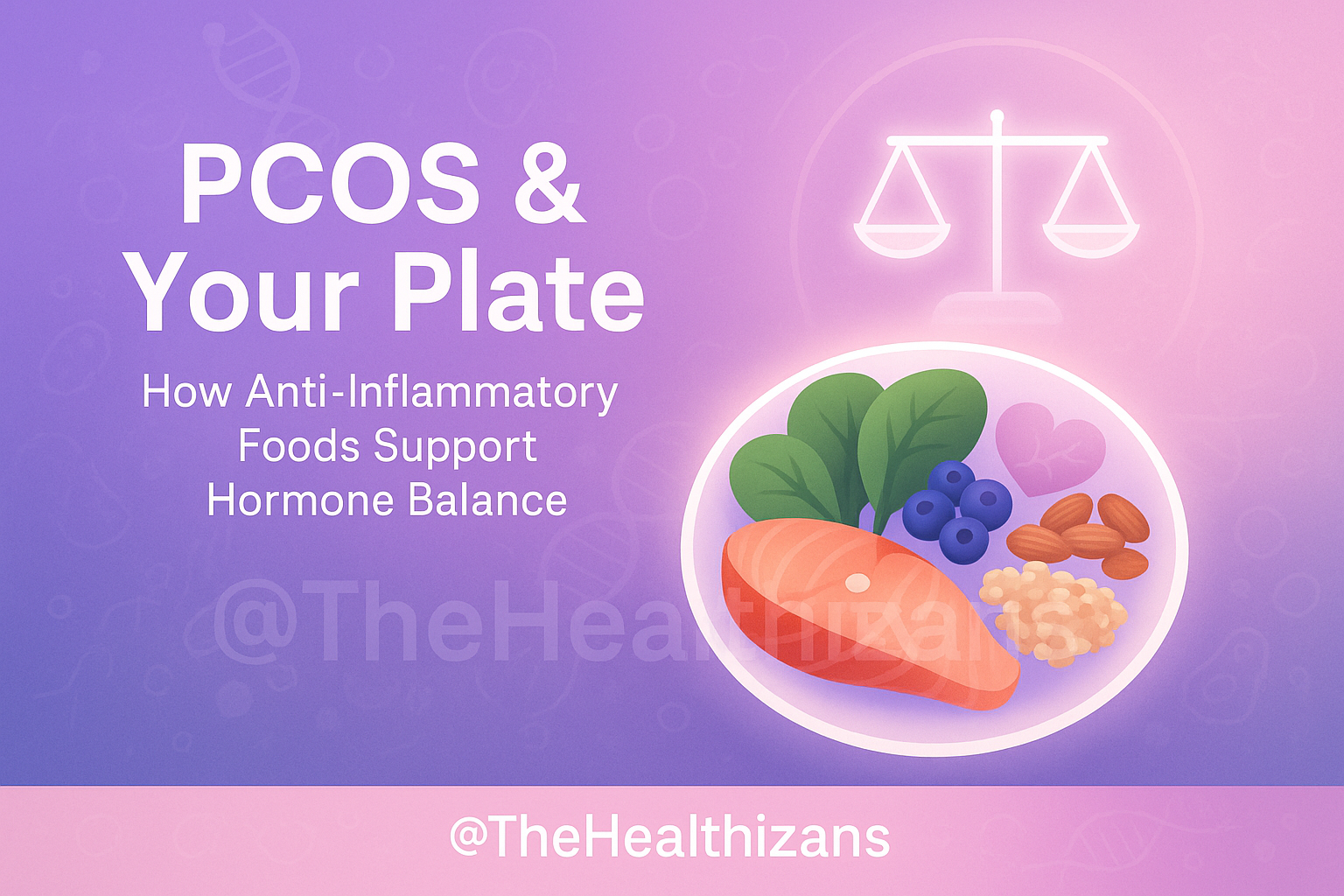
🥦 Anti-Inflammatory Foods That Support Hormones
Here are key food groups to add to your plate:
✅ Fibre-rich foods (whole grains, beans, oats, vegetables) — help regulate blood sugar and improve gut health.
✅ Omega-3 fats (salmon, sardines, chia seeds, walnuts) — reduce inflammation and support reproductive health.
✅ Colourful fruits & vegetables (berries, leafy greens, peppers) — loaded with antioxidants that protect cells.
✅ Spices (turmeric, ginger, cinnamon) — proven to reduce inflammatory markers.
✅ Plant-based proteins (lentils, tofu, quinoa) — balance blood sugar without excess saturated fat.
🚫 Foods to Limit or Avoid
Not every food is PCOS-friendly. These are best reduced:
❌ Refined carbs & sugars (white bread, pastries, soda) — worsen insulin resistance.
❌ Processed meats & fried foods — increase inflammation.
❌ Excess dairy or high-fat dairy — may trigger acne in some women with PCOS.
❌ Ultra-processed snacks — empty calories that fuel weight gain and hormonal imbalance.
🏃♀️ Lifestyle Habits That Complement Food Choices
Nutrition works best when paired with healthy habits:
- Movement: Aim for at least 30 minutes of activity (walking, yoga, strength training) most days of the week.
- Sleep: 7–9 hours of quality sleep helps regulate cortisol and insulin.
- Stress management: Meditation, journaling, or deep breathing reduces stress-related hormone spikes.
✨ Key Takeaways
- PCOS is linked with chronic inflammation, which worsens symptoms.
- Anti-inflammatory foods like fibre, omega-3s, and antioxidants can help restore hormone balance.
- Lifestyle matters — movement, sleep, and stress control amplify the benefits of healthy eating.
For a full foundation on the condition itself, make sure to revisit our [PCOS 101: What You Need to Know] guide before diving into lifestyle strategies.
❓ What’s Your Take?
Have you noticed certain foods trigger or ease your PCOS symptoms? Share your story your tip could help another woman feel less alone.
📚 Sources
- WHO. (2023). Polycystic Ovary Syndrome Fact Sheet.
- ACOG. (2021). PCOS Clinical Guidance.
- NHS. (2022). PCOS and Diet.
- Legro, R. S. et al. (2013). Diagnosis and Treatment of PCOS: An Endocrine Society Clinical Practice Guideline.
About the Author