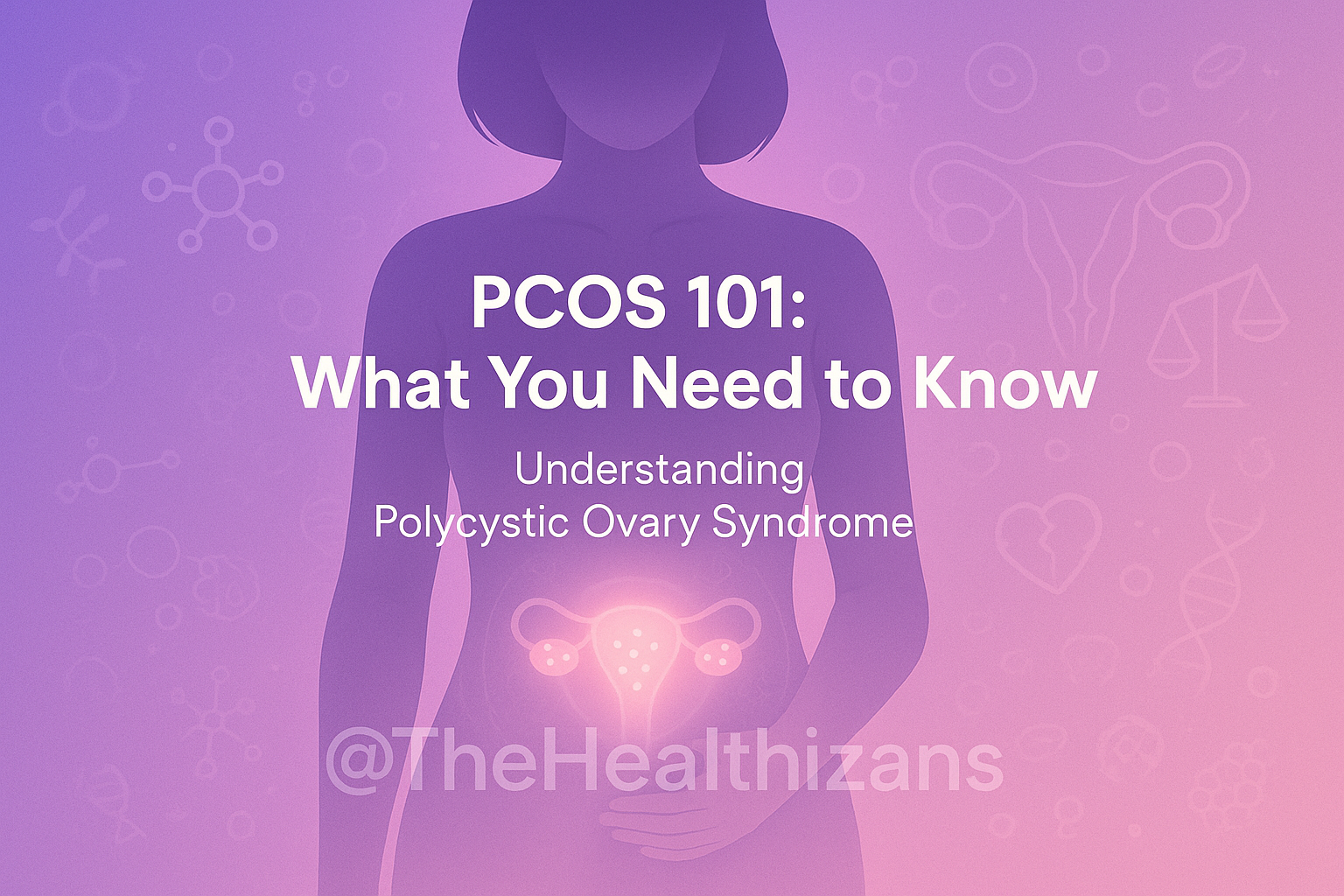
Polycystic Ovary Syndrome (PCOS) affects an estimated 1 in 10 women of reproductive age worldwide (WHO, 2023). Despite its prevalence, up to 70% of women remain undiagnosed — often told their symptoms are “just hormonal changes” or “stress.”
PCOS is more than an irregular period problem — it’s a hormonal and metabolic condition that can affect fertility, skin, weight, and even long-term health.
🧬 What Exactly Is PCOS?
PCOS is a condition where the ovaries produce excess androgens (male-type hormones like testosterone). This disrupts normal ovulation and leads to:
- Irregular or absent periods
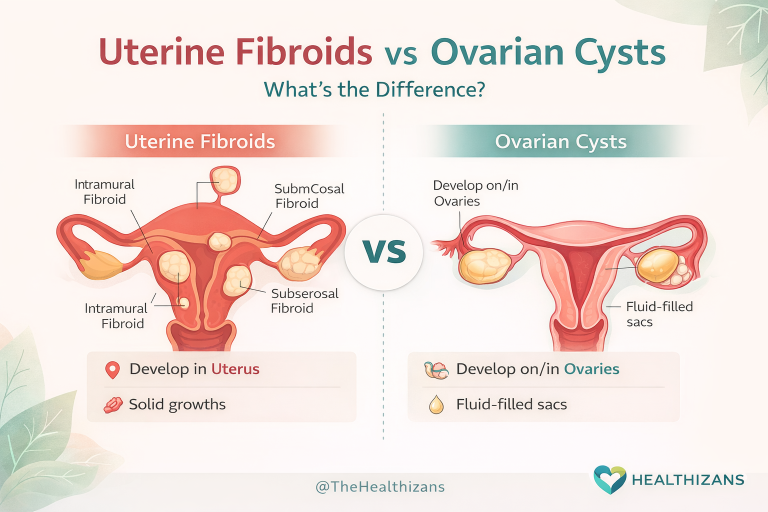
- Small cyst-like follicles on the ovaries (visible via ultrasound)
- Signs of androgen excess (acne, excess facial/body hair, or scalp hair thinning)
Doctors usually diagnose PCOS using the Rotterdam Criteria:
✅ Irregular ovulation
✅ Excess androgen symptoms or blood levels
✅ Polycystic ovaries on scan
(You need two of the three for a diagnosis).
🚨 Common Symptoms of PCOS
Symptoms vary, but may include:
- Missed or unpredictable periods
- Difficulty getting pregnant
- Weight gain or difficulty losing weight
- Excess hair growth (hirsutism)
- Acne or oily skin
- Hair thinning on the scalp
- Fatigue or mood changes
🌍 PCOS Beyond Fertility
PCOS isn’t just about reproduction. It’s also linked to:
- Insulin resistance → higher risk of type 2 diabetes
- High cholesterol & blood pressure → increased heart disease risk
- Endometrial cancer risk (due to prolonged unopposed oestrogen)
- Mental health challenges → anxiety, depression, and low self-esteem
🥗 Managing PCOS
While there’s no cure, management makes a huge difference:
- Lifestyle changes: Healthy diet, regular exercise, and sleep hygiene help balance hormones and improve insulin sensitivity.
- Medications: Options include contraceptive pills (to regulate cycles), metformin (for insulin resistance), and fertility treatments if trying to conceive.
- Skin/hair treatments: Dermatology care for acne, laser therapy or medications for hair growth concerns.
- Mental health support: Therapy, support groups, or mindfulness practices.
🩺 When to See a Doctor
Seek medical advice if you have:
- Very irregular or absent periods
- Excess hair growth, severe acne, or unexplained weight gain
- Difficulty getting pregnant
- Strong family history of diabetes or hormonal issues
✅ Key Takeaways
- PCOS affects 1 in 10 women but many go undiagnosed.
- It’s a whole-body condition affecting hormones, metabolism, fertility, and mental health.
- Lifestyle changes + medical support can make symptoms much more manageable.
❓ What’s Your Take?
Do you know someone with PCOS — or have you experienced the frustration of delayed diagnosis yourself? Share your story — your voice might help another woman feel less alone.
📚 Sources
- WHO. (2023). Polycystic Ovary Syndrome Fact Sheet.
- NHS. (2022). Polycystic Ovary Syndrome Overview.
- ACOG. (2021). PCOS Clinical Guidance.
- Rotterdam ESHRE/ASRM Criteria, 2003.
About the Author