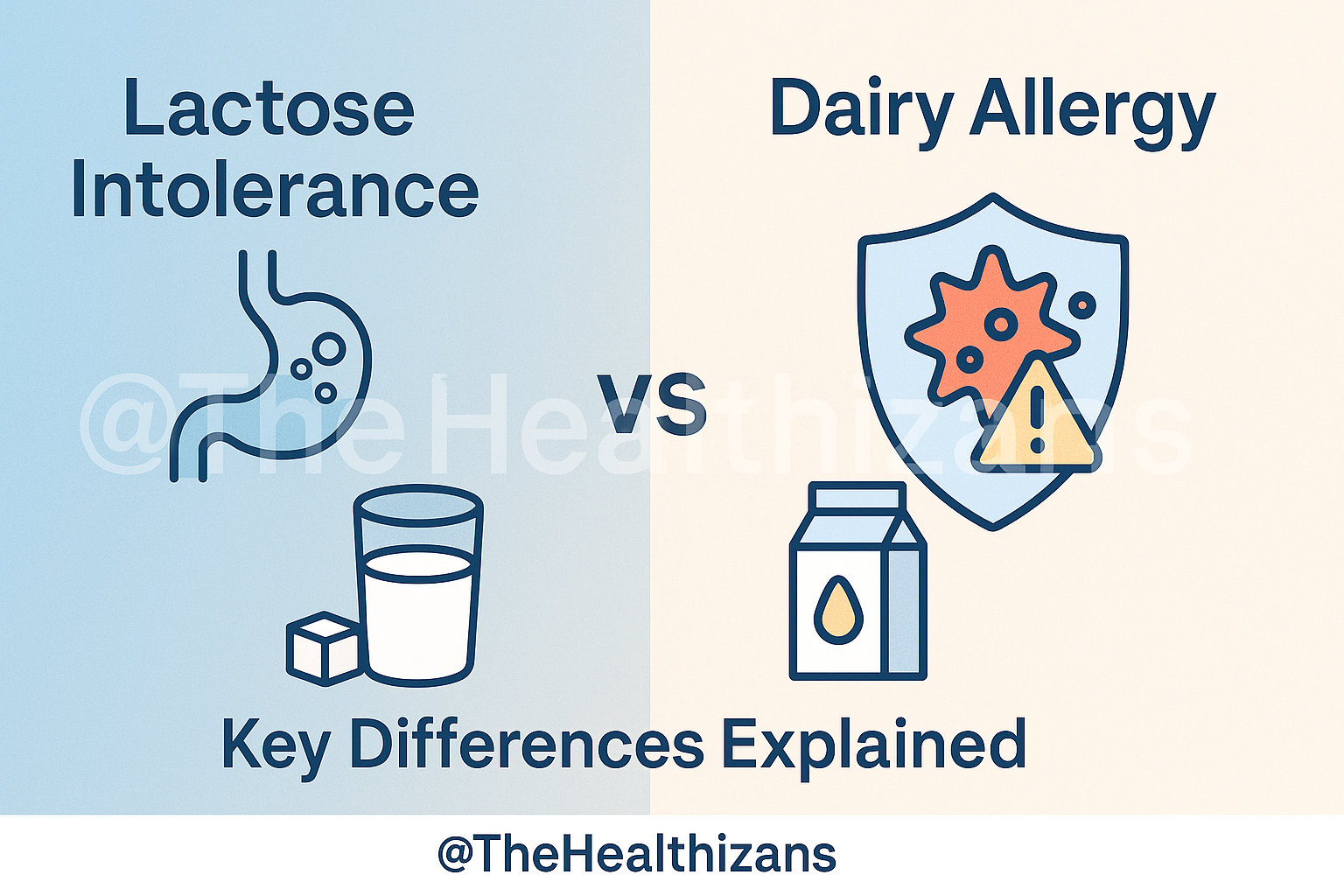
For many of us, dairy is a daily delight — from milk in morning coffee to yoghurt, cheese, and ice cream. Yet, for others, these same foods bring bloating, cramps, or even allergic reactions. When it comes to lactose intolerance vs dairy allergy, the confusion is common, but the causes are completely different. One involves your digestive system, while the other triggers your immune system.
Understanding these two conditions not only helps you make healthier dietary choices, but also prevents unnecessary restrictions or serious health scares.
🩺 What Is Lactose Intolerance?
Lactose intolerance is a digestive condition where your body struggles to break down lactose, the natural sugar found in milk. This happens when your small intestine produces too little lactase, the enzyme that digests lactose. As a result, undigested lactose ferments in the gut — leading to discomfort.
Common symptoms (typically within a few hours of consuming dairy):
- Bloating and gas
- Stomach cramps
- Diarrhoea
- Nausea
It’s unpleasant, but not dangerous. In fact, many people with lactose intolerance can still enjoy small amounts of dairy or switch to lactose-free products without issue.
💡 Did you know? You can also support your gut health naturally by eating probiotic-rich foods. Explore how gut balance affects mood and energy in our related article: Your Gut-Brain Connection: Why Digestion Affects Your Mood.
🛡️ What Is a Dairy Allergy?
A dairy allergy (or cow’s milk protein allergy) is very different. It’s an immune system reaction to milk proteins such as casein or whey. The body mistakes these proteins for harmful invaders, prompting a defensive — and sometimes dangerous — immune response.
Symptoms can range from mild to severe, including:
- Hives or itchy rashes
- Swelling of lips, tongue, or throat
- Vomiting
- Wheezing or difficulty breathing
- In rare cases, anaphylaxis — a life-threatening reaction requiring emergency care
Unlike lactose intolerance, a dairy allergy can be life-threatening and demands complete avoidance of all milk proteins.
🔎 Key Differences at a Glance
| Feature | Lactose Intolerance 🥛 | Dairy Allergy 🚨 |
| Cause | Lack of lactase enzyme → lactose (milk sugar) not digested properly. | Immune system reacts to milk proteins (casein, whey) as harmful. |
| Body System | Digestive system | Immune system |
| Severity | Causes discomfort but is not dangerous. | Can be life-threatening (e.g., anaphylaxis). |
| Management | Limit dairy, use lactose-free or plant-based products. | Strictly avoid milk proteins; carry emergency medication (e.g., epinephrine). |
🌿 Living With Each Condition
🥛 Managing Lactose Intolerance
If you’re lactose intolerant, the goal is to reduce discomfort without cutting out essential nutrients.
- Lactose-free options: Choose milk, yoghurt, and cheese labelled lactose-free.
- Enzyme aids: Try lactase tablets or drops with dairy meals.
- Portion control: Hard cheeses and butter often contain very little lactose and may be well tolerated.
- Plant-based alternatives: Oat, soy, almond, or coconut milk make great replacements — check they’re fortified with calcium and vitamin D.
- Probiotic support: Foods like yoghurt with live cultures, kefir, and fermented vegetables (e.g. sauerkraut) can improve digestion.
🚨 Managing a Dairy Allergy
Those with a dairy allergy must be far more cautious:
- Strict avoidance: Eliminate all sources of cow’s milk and derivatives (casein, whey, lactose).
- Check labels carefully: Milk proteins can hide in processed foods, sauces, chocolate, or even deli meats.
- Fortified alternatives: Plant-based drinks fortified with calcium and vitamin D help maintain bone health.
- Emergency readiness: Carry an epinephrine auto-injector (e.g. EpiPen) if advised, and inform friends or colleagues.
- Dietitian support: A qualified dietitian can ensure balanced nutrition, especially for children or pregnant women avoiding dairy.
🌍 A Global Perspective
Around the world, lactose intolerance is much more common than dairy allergy. Up to 70–90% of adults in Asia, Africa, and South America produce little or no lactase after childhood. By contrast, people of Northern European descent tend to maintain lactase activity, which is why dairy remains central to their diets.
Meanwhile, dairy allergy mainly affects infants and young children — about 2–3% under age 3 — though most outgrow it by school age. Adults rarely develop new milk allergies.
✅ Key Takeaway
- Lactose intolerance is a digestive problem — uncomfortable but not dangerous.
- Dairy allergy is an immune condition — potentially life-threatening.
- The management differs: lactase enzyme aids or lactose-free products help with intolerance, while allergy sufferers must strictly avoid all dairy proteins and stay prepared for emergencies.
By knowing the difference between lactose intolerance vs dairy allergy, you can make confident food choices, protect your health, and still enjoy delicious, nutritious meals — safely.
💬 What’s Your Take?
Do you or someone you know struggle with dairy? Was it diagnosed as intolerance or allergy — and how have you managed it?
Share your story with the @TheHealthizans community 👇
📚 Sources
- NHS – Lactose Intolerance (2023)
- NHS – Cow’s Milk Allergy (2022)
- World Allergy Organization – Milk Allergy Guidelines (2020)
- NIDDK – Lactose Intolerance (2021)
About the Author