As we get older, many of us notice we can’t move quite as quickly, lift as much, or walk as far as we once could.
This isn’t just “getting weaker with age” — in many cases, it’s something more specific called sarcopenia.
🔍 What Is Sarcopenia?
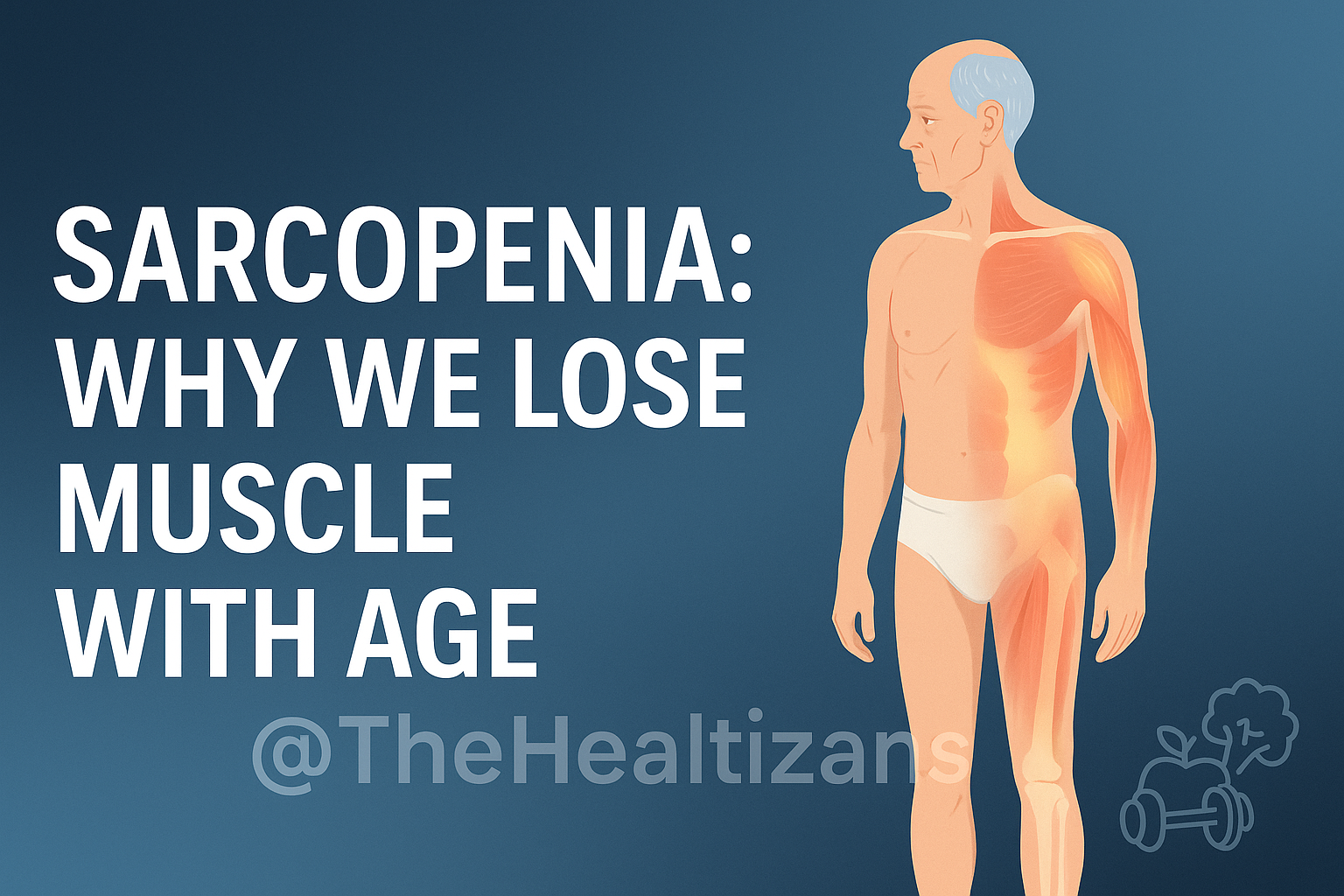
Sarcopenia is the progressive loss of muscle mass and strength that occurs with ageing.
It usually begins around the age of 40 and speeds up after 60, but lifestyle and health conditions can make it happen earlier.
Unlike the gradual decline we expect with age, sarcopenia can lead to:
- 🦵 Reduced mobility
- ⚖️ Balance problems and falls
- 🛌 Frailty and loss of independence
It’s more than just a nuisance — it’s a serious health condition linked to poorer quality of life.
🧠 Why Does Sarcopenia Happen?
Several factors contribute to muscle loss:
- Ageing biology: Natural changes in hormones like testosterone, oestrogen, and growth hormone.
- Inactivity: Sedentary lifestyles accelerate muscle decline.
- Poor nutrition: Inadequate protein, vitamin D, and other nutrients.
- Chronic illness: Conditions like diabetes, heart disease, and cancer increase risk.
- Inflammation: Long-term low-grade inflammation can damage muscle tissue.
🚨 Warning Signs to Watch For
Sarcopenia often creeps in slowly. Look out for:
- Struggling to climb stairs 🏃
- Difficulty standing from a chair 🪑
- Weaker grip strength ✊
- Slower walking speed 🚶
- Frequent fatigue or falls ⚠️
🥗 Fighting Back: Can Sarcopenia Be Prevented?
The good news: yes — you can slow, prevent, or even reverse some effects.
- Strength training: Resistance exercises, weightlifting, or even bodyweight routines build muscle.
- Protein-rich diet: Lean meats, fish, beans, lentils, eggs, and dairy support muscle repair.
- Vitamin D & calcium: Essential for both muscle and bone strength.
- Stay active daily: Walking, climbing stairs, and gardening all count.
- Medical support: In some cases, doctors may recommend supplements or physical therapy.
🌍 Global and NHS Perspective
- The NHS highlights exercise and diet as the most effective tools for preventing sarcopenia in older adults.
- The World Health Organization stresses active ageing policies worldwide to reduce disability and healthcare costs linked to frailty.
- Countries with active lifestyles (e.g., walking, daily physical work, Mediterranean diet) show lower rates of sarcopenia.
💡 Analyst’s Corner – Real-World Insight
Hospital admissions data show that older adults with sarcopenia are more likely to have longer stays and higher risks of complications after surgery or illness.
This makes early detection and prevention not just important for individuals, but also for healthcare systems globally.
✅ Key Takeaway
Sarcopenia isn’t inevitable — it’s manageable.
By staying active, eating well, and recognising the warning signs early, you can keep your muscles strong and your independence intact well into older age.
💬 What’s Your Take?
Do you or someone you know struggle with age-related muscle weakness?
Share your story or tips — you could inspire others to take action today.
📚 Sources
- NHS. How to prevent muscle loss as you age. https://www.nhs.uk
- World Health Organization. Healthy ageing and functional ability. https://www.who.int
- Cruz-Jentoft AJ et al. Sarcopenia: revised European consensus on definition and diagnosis. Age and Ageing. 2019.
About the Author