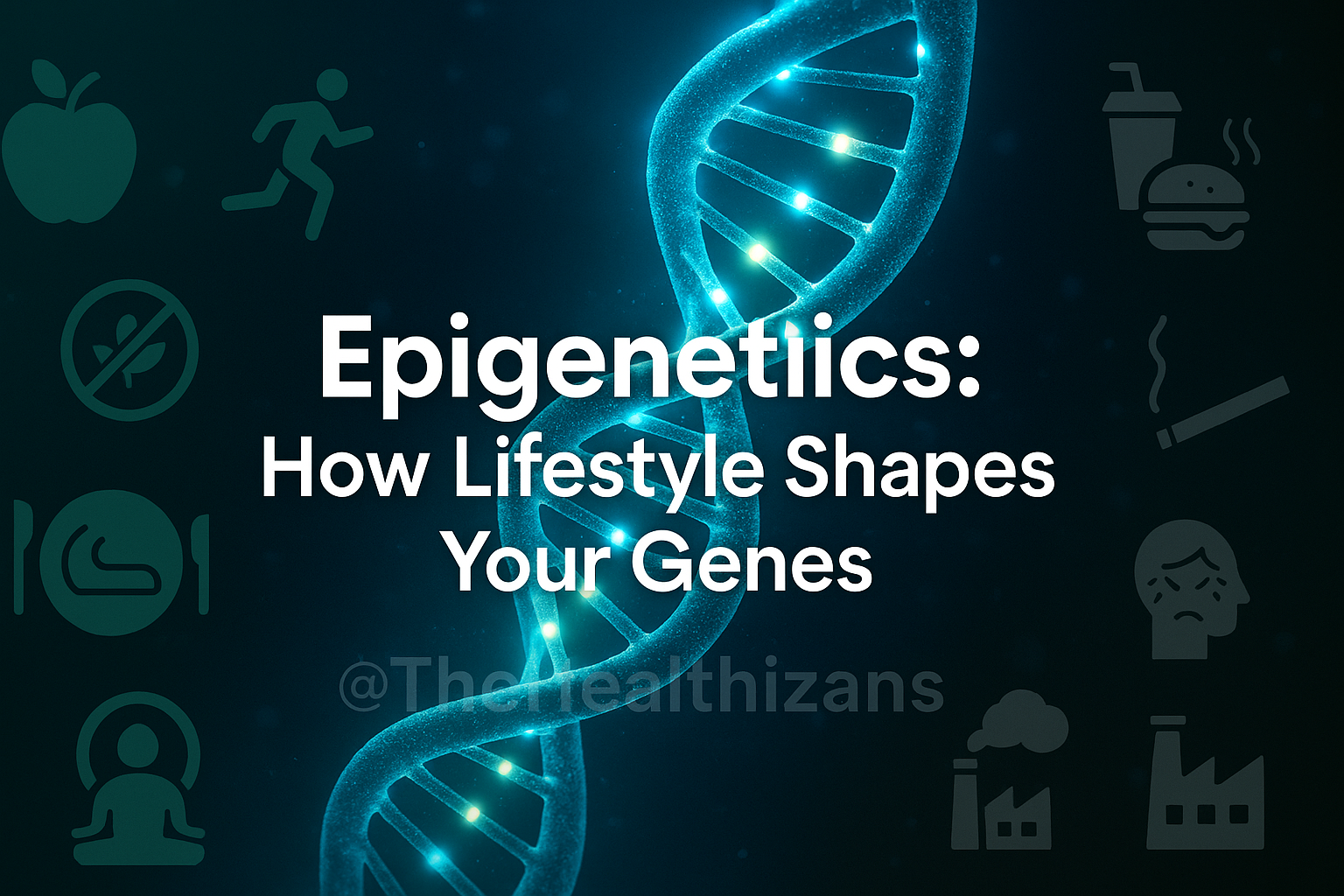
We often hear people say, “It runs in the family.” While our genes certainly influence health, science now shows that lifestyle choices can switch genes on or off without changing the DNA itself. This fascinating process is called epigenetics — and it reveals that we have more control over our health than once believed.
🧬 Epigenetics 101: Beyond the DNA Code
Think of your DNA as the script of a play. Epigenetics is the director, deciding which lines are spoken and which are left out. These “directors” are chemical tags that attach to DNA, influencing whether a gene is active or silent.
- DNA = the script (fixed)
- Epigenetic marks = stage directions (flexible)
- Lifestyle = the environment shaping the performance
This means two people with the same genetic risk for heart disease could have very different outcomes depending on how their genes are “read” by their lifestyle environment.
🍎 Diet & Your Genes
Food doesn’t just fuel your body — it talks to your DNA. Nutrients like folate, B vitamins, and compounds in green tea and turmeric can add or remove chemical tags on genes.
- Diets rich in fruits, vegetables, and omega-3s promote protective gene expression.
- Processed foods and excess sugar may trigger inflammatory genes.
In fact, the WHO recommends plant-rich diets not only for heart and metabolic health, but also because they support favourable epigenetic activity.
🏃 Exercise: Gene Editing Without a Lab
Regular physical activity doesn’t just change your muscles — it changes how your genes behave.
- Exercise boosts genes linked to metabolism and fat burning.
- It reduces activity of genes that promote inflammation and insulin resistance.
- Even a single workout can trigger measurable epigenetic changes in muscle cells.
So, when you lace up your trainers, you’re not only burning calories — you’re literally re-programming your biology.
😴 Sleep, Stress & Gene Expression
Chronic stress and poor sleep don’t just make you feel drained; they leave “molecular scars.”
- High cortisol (stress hormone) alters the epigenetic control of genes tied to immunity and ageing.
- Poor sleep has been linked to epigenetic changes that accelerate cognitive decline and metabolic disorders .
On the other hand, mindfulness practices, adequate rest, and relaxation techniques can reverse some of these negative gene patterns.
🚭 Toxins & Habits That Rewrite Genes
- Smoking switches off tumour-suppressor genes, increasing cancer risk .
- Alcohol alters liver-related gene expression, raising risks of liver disease.
- Pollution and heavy metals have been shown to leave long-lasting epigenetic marks, sometimes passed to the next generation.
This is why public health campaigns emphasise not just quitting harmful habits but also reducing environmental exposures.
👶 Generational Impact: Your Choices, Their Genes
Epigenetics doesn’t stop with you. Research shows that lifestyle choices may influence the gene expression of your children and grandchildren.
- Studies in animals and humans suggest that maternal diet during pregnancy can shape a baby’s long-term health outcomes.
- Paternal factors (like obesity or smoking) can also alter sperm epigenetics .
This highlights why healthy living is more than self-care — it’s an investment in future generations.
🌍 The Big Picture
Epigenetics is reshaping how global health bodies think about prevention. While genetics may set the stage, lifestyle writes the story. That’s empowering — because it means small daily choices can make a big difference in how your body and even your children’s bodies function.
🔑 Key Takeaways
- Your genes aren’t your destiny — lifestyle influences which ones are active.
- Diet, exercise, stress, sleep, and environmental exposures all leave epigenetic marks.
- Healthy habits can boost protective genes, while harmful ones may activate disease pathways.
- Epigenetic effects can pass down to the next generation.
💬 What’s Your Take?
Would knowing that your lifestyle could affect not just your health but also your children’s motivate you to make changes? Share your thoughts below ⬇️ — we’d love to hear from you!
📚 Sources
- National Institutes of Health (NIH). Epigenomics Fact Sheet.
- Choi, S. & Friso, S. (2010). Nutrients and epigenetics. Current Opinion in Clinical Nutrition & Metabolic Care.
- World Health Organization. Healthy Diet Factsheet.
- Denham, J. et al. (2015). Exercise and epigenetic regulation of skeletal muscle. Exercise and Sport Sciences Reviews.
- Barres, R. et al. (2012). Acute exercise remodels promoter methylation in human skeletal muscle. Cell Metabolism.
- Archer, S. N. et al. (2014). Sleep loss and circadian misalignment influence DNA methylation. PNAS.
- Zeilinger, S. et al. (2013). Tobacco smoking leads to extensive genome-wide changes in DNA methylation. PLoS One.
- Soubry, A. (2015). Epigenetic inheritance and evolution: A paternal perspective. Human Molecular Genetics.
About the Author