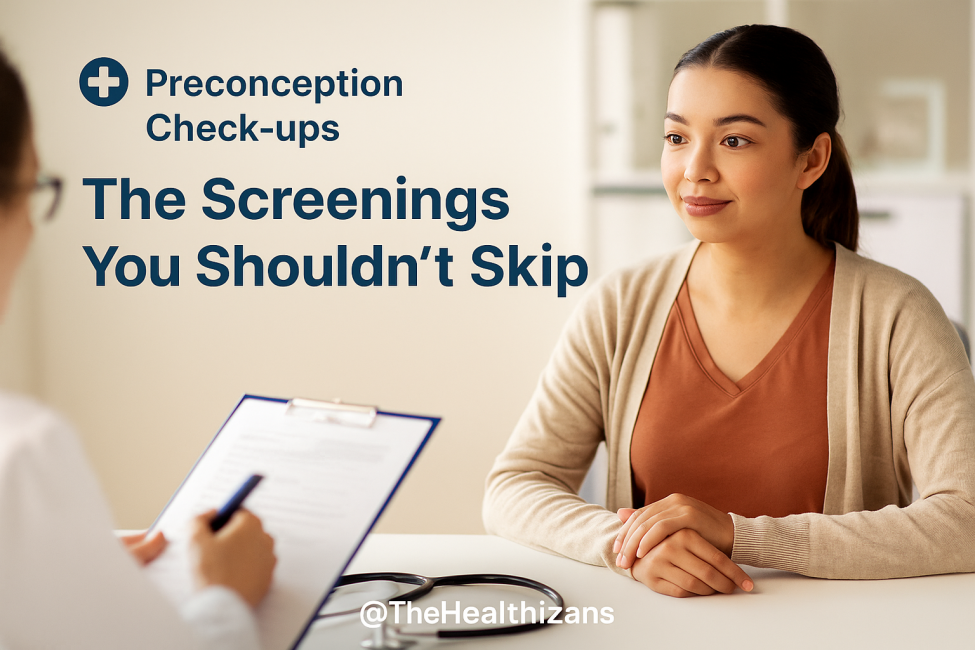
If you’re planning to start or grow your family, the journey to pregnancy begins with more than just healthy habits — it starts with knowing your health inside out.
A preconception check-up is your opportunity to address potential risks before you conceive, helping you and your baby get the healthiest possible start.
Here’s a guide to the essential screenings and tests you should have before trying for a baby.
1️⃣ Blood Pressure and Heart Health Check
High blood pressure can increase the risk of complications like pre-eclampsia during pregnancy.
- Get your blood pressure checked at your GP surgery or pharmacy.
- Discuss any history of heart disease, especially if it runs in your family.
2️⃣ Blood Tests for Key Health Markers
Your GP may order blood tests to check for:
- Anaemia — Low iron can affect ovulation and cause fatigue.
- Thyroid function — Imbalances can affect fertility.
- Blood sugar — Important if you have risk factors for diabetes.
💡 Tip: If you have irregular cycles, hormone tests may also be recommended.
3️⃣ Immunity and Vaccination Review
Certain infections can harm pregnancy if caught for the first time while you’re expecting.
- Rubella (German measles) immunity is essential.
- Whooping cough and flu vaccines may be advised before or during pregnancy.
4️⃣ Sexual Health Screening
Some sexually transmitted infections (STIs) can affect fertility or harm your baby during pregnancy.
- Screening is quick and can often be done with a urine test or swab.
- Early treatment can prevent complications.
5️⃣ Cervical Screening (Smear Test)
If you’re due for your smear test, get it done before pregnancy.
- Cervical screening helps detect changes early, reducing the risk of cervical cancer.
- It’s not usually carried out during pregnancy, so timing matters.
6️⃣ Genetic and Family Health History Review
If you or your partner have a family history of genetic conditions, your GP may refer you for genetic counselling.
- This can help you understand potential risks and options.
7️⃣ Medication and Supplement Review
Some medicines aren’t safe in pregnancy.
- Review all prescriptions, over-the-counter medicines, and supplements with your GP or pharmacist.
🌟 Key Takeaway
A preconception check-up isn’t just a formality — it’s an investment in your health and your baby’s future. By addressing potential issues now, you can step into pregnancy with confidence and peace of mind.
💬 What’s Your Take?
Have you had your preconception check yet? Which screening surprised you the most? Share your experience below — it could help someone else prepare.
📚 Sources
- NHS. Planning a Pregnancy – Preconception Health. https://www.nhs.uk
- Royal College of Obstetricians and Gynaecologists. Pre-pregnancy Care.
- World Health Organization. Preconception Care Policy Brief.
About the Author