Bringing a baby into the world is one of life’s most exciting journeys — but the path to pregnancy starts long before that positive test.
Preconception planning is about making your body, mind, and lifestyle as healthy as possible before you start trying. Experts agree that the months leading up to conception can have a big impact on fertility, pregnancy outcomes, and even your baby’s lifelong health.
In this guide, we’ll walk you through 7 essential steps to help you prepare for this next chapter.
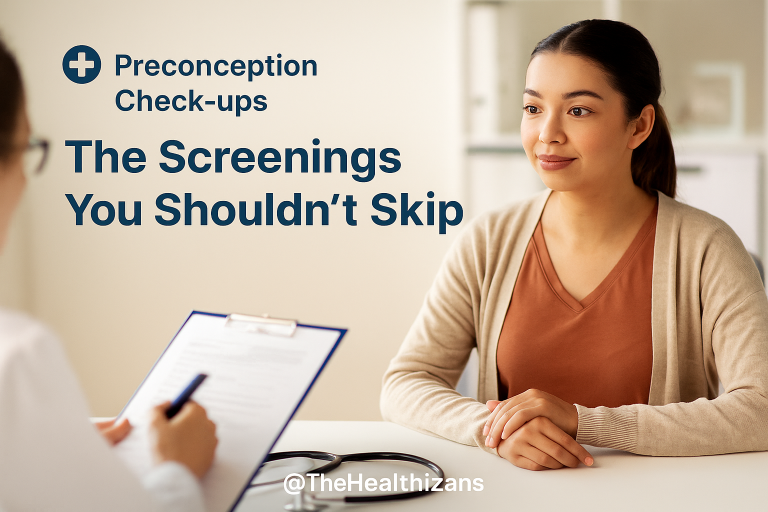
1️⃣ Book a Preconception Health Check
Before you try, schedule a check-up with your GP or midwife.
- Discuss your medical history, family health risks, and any medicines you’re taking.
- Review recommended vaccines, such as MMR and whooping cough boosters.
- Check for chronic conditions (e.g., diabetes, thyroid disorders) that might need optimising before pregnancy.
💡 Tip: This is also a good time for your partner to book a health check — sperm health matters too!
2️⃣ Start Taking Folic Acid Early
Folic acid helps prevent neural tube defects, such as spina bifida.
- NHS guidance recommends 400 micrograms daily at least 3 months before conception.
- Some women need higher doses — speak to your doctor if you have diabetes, epilepsy, or a family history of neural tube defects.
🍃 You can also get folate naturally from leafy greens, beans, and fortified cereals.
3️⃣ Aim for a Healthy Weight
Both being underweight and overweight can affect ovulation and fertility.
- Aim for a BMI between 18.5 and 24.9 before trying to conceive.
- Gradual, sustainable changes to diet and exercise are more effective than crash diets.
💪 Regular moderate exercise — like brisk walking or swimming — supports both fertility and a healthy pregnancy.
4️⃣ Balance Your Diet for Fertility
Nourish your body with foods rich in:
- Protein (lean meat, fish, eggs, legumes)
- Healthy fats (avocado, nuts, olive oil)
- Fibre & antioxidants (fruits, vegetables, whole grains)
🥗 Consider limiting ultra-processed foods, sugary drinks, and excessive caffeine.
5️⃣ Stop Smoking and Reduce Alcohol
Smoking can affect egg quality and fertility in both women and men. 🚭
- Quitting before you try improves chances of conception and reduces pregnancy complications.
- Alcohol can affect hormone balance — NHS advice is to avoid it entirely when trying to conceive.
6️⃣ Manage Stress and Sleep Well
Stress can disrupt menstrual cycles and affect sperm quality.
- Try mindfulness, yoga, or journaling to manage stress levels.
- Aim for 7–9 hours of quality sleep per night to support hormone regulation.
🧘 Your emotional wellbeing is just as important as your physical health during this time.
7️⃣ Track Your Cycle and Ovulation
Understanding your menstrual cycle can help you time intercourse for the most fertile days.
- Use ovulation predictor kits or fertility apps.
- Remember that sperm can live inside the female reproductive tract for up to 5 days — so timing matters.
📆 If you’ve been trying for 12 months (or 6 months if you’re over 35) without success, speak to your GP.
🌟 Key Takeaway
Preconception care is about laying the healthiest foundation possible — for you, your partner, and your future baby. Even small changes now can make a big difference later.
💬 What’s Your Take?
Are you currently preparing for pregnancy? Which of these steps have you started with? Share your journey in the comments — your story might inspire someone else!
📚 Sources
- NHS. Planning a Pregnancy. https://www.nhs.uk/pregnancy/trying-for-a-baby/planning/
- World Health Organization (WHO). Preconception Care: Maximising the Gains for Maternal and Child Health.
- Public Health England. Folic Acid and Pregnancy.
About the Author