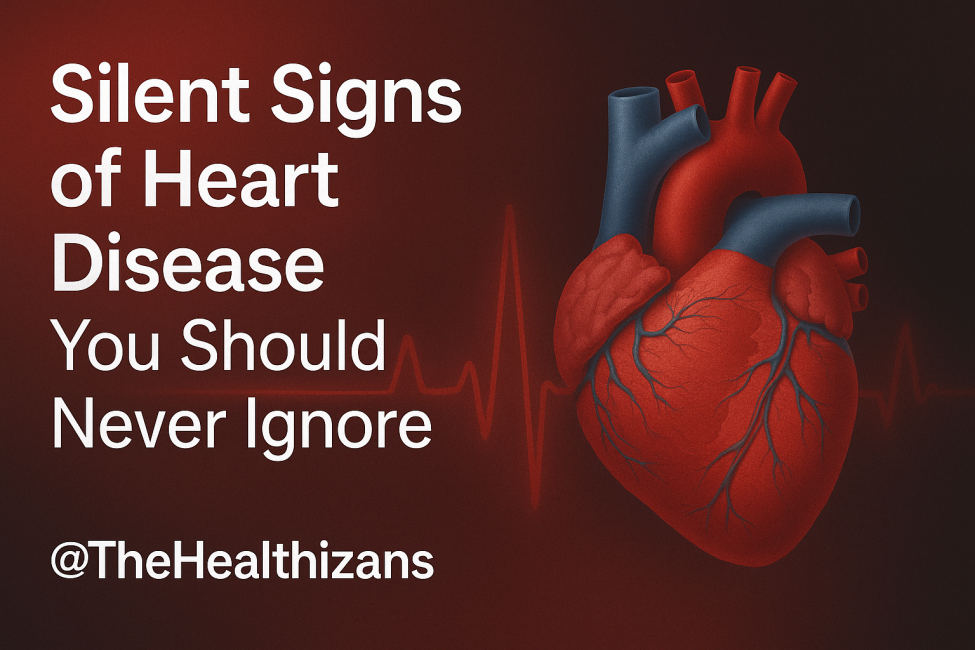
Heart disease is often called a silent killer — and for good reason.
While some heart problems cause clear and dramatic symptoms, many develop quietly, with subtle signs that are easy to overlook.
Ignoring these signals can delay diagnosis and treatment, putting you at higher risk of a heart attack, stroke, or other serious complications.
🔍 Why Heart Disease Can Be Silent
The heart is a resilient organ, and in the early stages of disease, it often adapts and compensates for reduced function.
This means you might not feel intense pain or sudden symptoms until the condition becomes advanced.
According to the World Health Organization (WHO), cardiovascular diseases account for over 17 million deaths globally each year, with many cases going undetected until late stages.
🚨 Silent Signs You Shouldn’t Ignore
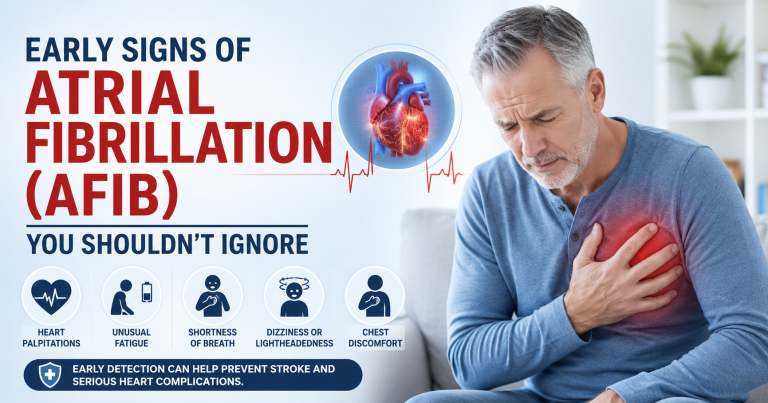
1. Unusual Fatigue 😴
If you feel exhausted doing activities you used to handle easily — such as walking up stairs or carrying groceries — your heart may not be pumping efficiently.
2. Shortness of Breath 🌬
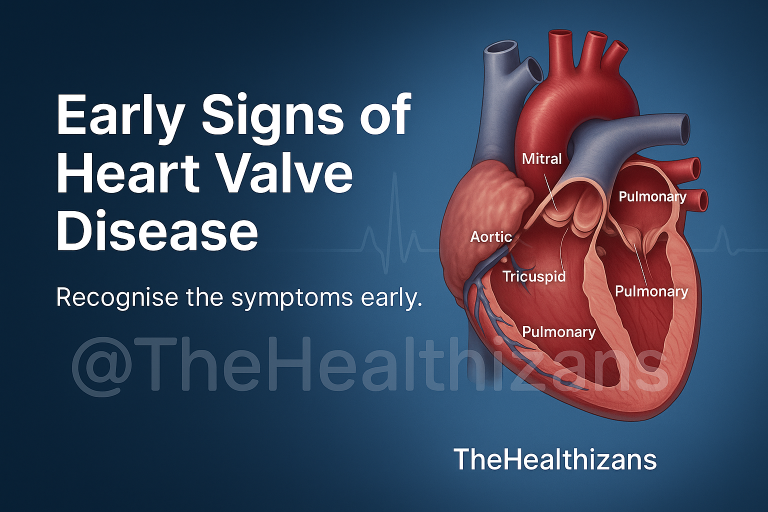
Breathlessness during mild activity, or even at rest, can indicate heart failure, narrowed arteries, or valve problems.
3. Mild Chest Discomfort 💢
Not all heart-related chest symptoms feel like intense pain. Pressure, heaviness, or a squeezing sensation can be early warning signs.
4. Swelling in the Feet, Ankles, or Abdomen 🦶
This can be due to fluid build-up (oedema) when the heart can’t circulate blood effectively.
5. Dizziness or Light-headedness 🌀
Feeling faint or unsteady could be linked to irregular heart rhythms or reduced blood flow to the brain.
6. Persistent Indigestion or Heartburn 🔥
Some people, especially women, experience these digestive-like symptoms during early heart trouble — often mistaken for stomach issues.
7. Irregular Heartbeat ❤️🔥
Occasional skipped beats can be normal, but frequent palpitations or fluttering sensations warrant a check-up.
🌍 Global and NHS Perspective
- NHS guidance emphasises that women, people with diabetes, and older adults are more likely to experience atypical or silent symptoms.
- In some countries, limited access to cardiac screening means these subtle signs often go unnoticed until a major event occurs.
- Regular health checks — including blood pressure, cholesterol, and glucose tests — can detect problems before symptoms appear.
💡 Analyst’s Corner – Real-World Insight
Hospital data shows that delays in recognising early symptoms lead to longer hospital stays and higher complication rates.
Education campaigns that highlight subtle warning signs have been shown to improve early diagnosis and survival rates.
✅ How to Protect Yourself
- Schedule routine health screenings, even if you feel well.
- Adopt a heart-healthy lifestyle: balanced diet, regular exercise, no smoking, limited alcohol.
- Seek medical advice immediately if you notice any new or unexplained symptoms.
💬 What’s Your Take?
Have you or someone you know experienced a “silent” heart problem?
Share your experience — your story could help others take action sooner.
📚 Sources
- World Health Organization. Cardiovascular diseases (CVDs) factsheet. https://www.who.int
- NHS. Heart disease symptoms. https://www.nhs.uk
- American Heart Association. Heart attack symptoms. https://www.heart.org
About the Author