A stroke doesn’t give you time to prepare. It happens suddenly, often without warning, and when it does, every minute becomes critical. Knowing how to spot a stroke fast is one of the most powerful skills you can have — whether you’re at home, at work, or out in public. The sooner someone gets medical help, the greater their chance of surviving and recovering well.
Worldwide, stroke remains one of the leading causes of death and disability. Yet many people still don’t recognise the early signs. This means valuable minutes are lost — minutes that could protect the brain from long-term damage. Learning to identify a stroke early is more than medical knowledge; it’s a life-saving skill.
Before we go deeper, you may want to read another important article in our heart–brain health series:
👉 How Blood Pressure Affects Your Heart and Arteries
since high blood pressure is one of the biggest risk factors for stroke.
Why Acting Fast Matters
A stroke occurs when blood flow to a part of the brain is suddenly cut off. Sometimes this is caused by a blockage (ischaemic stroke); other times, a blood vessel bursts and bleeds into the brain (haemorrhagic stroke). In both cases, the brain is starved of oxygen, and brain cells begin to die within minutes.
The faster a person receives emergency treatment — clot-busting medication, clot removal, or stabilisation — the better their chances of surviving without severe disability. Research consistently shows that for every minute a stroke is untreated, the brain can lose millions of neurons. This is why learning how to spot a stroke fast is essential for everyone.
The FAST Test — The Easiest Way to Recognise a Stroke
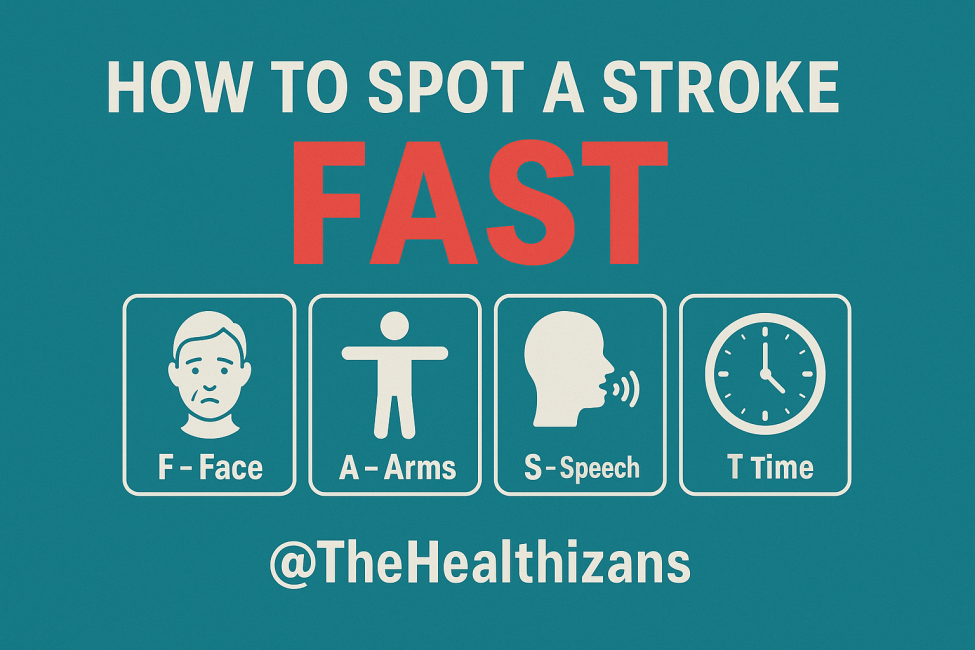
Health organisations across the world, including the NHS and the World Stroke Organization, teach the FAST test because it helps ordinary people spot a stroke fast with just four simple checks:
- Face: Ask the person to smile. Does one side droop or look uneven?
- Arms: Ask them to lift both arms. Does one arm drift down or feel weak?
- Speech: Get them to repeat a short sentence. Does their speech sound slurred or unusual?
- Time: If you see any of these signs — even one — call emergency services immediately.
FAST works because most strokes begin with changes in facial movement, arm strength, or speech. Quick recognition saves lives.
Other Stroke Symptoms You Should Know
While FAST captures the common signs, not all strokes look the same. Some appear more subtly, especially in younger adults or women.
Watch for sudden:
- Difficulty seeing in one or both eyes
- Severe headache with no known cause
- Trouble walking, dizziness, or loss of balance
- Confusion or difficulty understanding speech
If something feels “off” — don’t wait to be certain. Getting help early is always the safest decision.
Prevention Still Matters — And It Matters Everywhere
Up to 80% of strokes are preventable. The core risk factors are well-known: high blood pressure, high cholesterol, high blood sugar, poor diet, inactivity, smoking, and excessive alcohol use. Taking care of these areas dramatically lowers your risk.
Simple protective steps include eating more whole foods, staying active, attending routine check-ups, and managing conditions like diabetes or hypertension with medical guidance. Small changes add up — and they add up globally.
Why Speed Matters in Real Life
In UK hospitals, one of the most scrutinised stroke metrics is door-to-needle time — the time between arriving at hospital and receiving clot-busting treatment. The shorter this window, the better the outcome. Hospitals that consistently achieve faster response times have significantly higher recovery rates. This reinforces one truth: public awareness and fast recognition are as important as hospital care itself.
Final Thought
Learning how to spot a stroke fast is one of the simplest, yet most powerful ways you can protect yourself and your loved ones. You don’t need medical training — just awareness. If you ever notice facial drooping, arm weakness, or slurred speech, trust your instincts and act immediately. Quick action can mean the difference between recovery and lifelong disability.
Sources
- NHS — Act FAST: Stroke Symptoms and What to Do
- World Stroke Organization — Stroke Awareness
- American Stroke Association — Learn the Signs of Stroke
About the Author