🌍 The Changing Landscape of Health
For decades, health check-ups were all about blood pressure, blood sugar, and cholesterol. Mental health? Often overlooked — or worse, stigmatised.
But times are changing. Today, we recognise that emotional and psychological well-being are essential parts of overall health. The World Health Organization (WHO) defines health as “a state of complete physical, mental and social well-being — not merely the absence of disease” [1].
Yet, many routine health screenings still skip mental health altogether. That needs to change.
💬 What Is a Mental Health Check-in?
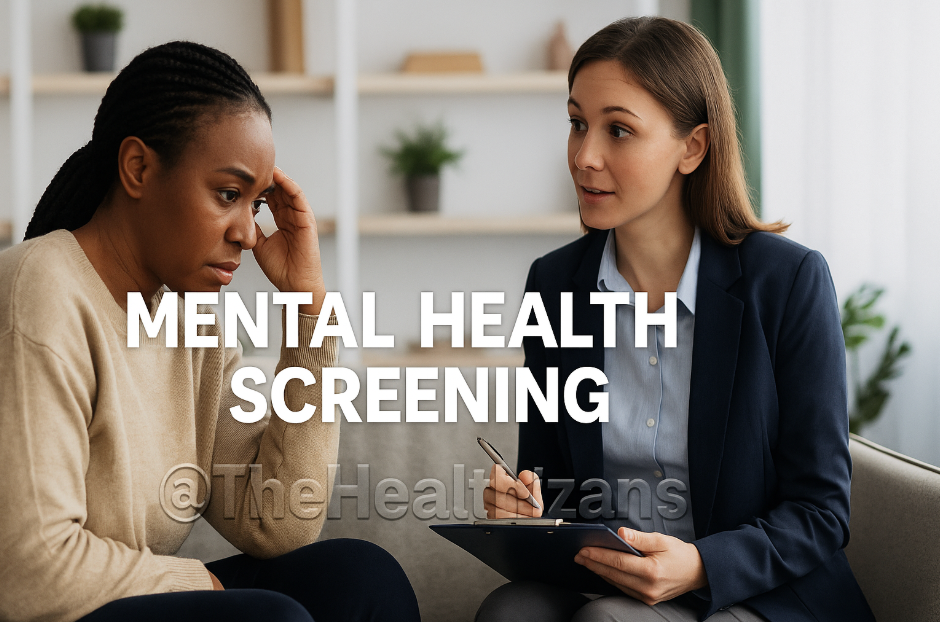
A mental health check-in is a structured opportunity to assess how you’re feeling emotionally and psychologically. It may be conducted:
- By your GP during a routine health check-up
- Through a self-assessment tool
- With a counsellor, therapist, or psychologist
Just like a physical exam checks your vital signs, a mental health check looks at:
- Mood and emotional balance
- Sleep quality
- Energy levels
- Concentration and memory
- Appetite and interest in activities
- Thoughts of self-harm or hopelessness
🧭 It’s not just about diagnosing depression or anxiety — it’s about checking in on stress levels, burnout, emotional exhaustion, and the impact of life events like grief or job loss.
🧪 Why Include Mental Health in Routine Screening?
🔍 1. Mental Health Disorders Are Common — But Often Missed
Globally, 1 in 8 people live with a mental health disorder, with depression and anxiety being the most common [2]. Yet, most go undiagnosed, especially in routine primary care.
🧠 2. Emotional Health Affects Physical Health
Mental and physical health are deeply connected:
- Chronic stress can increase the risk of heart disease and diabetes [3]
- Depression can worsen pain conditions and impact recovery
- Anxiety can cause digestive disorders, insomnia, and immune dysregulation
🧭 3. Early Support Makes a Big Difference
Just like early cancer or diabetes screening, early mental health support improves outcomes — reducing hospitalisations, substance abuse risk, and suicide [4].
👥 Who Should Get a Mental Health Check-in?
Everyone.
But especially:
- Teenagers and young adults
- Adults undergoing major life transitions (new job, marriage, childbirth, retirement)
- People with chronic illnesses or long-term medication use
- Healthcare workers and caregivers
- Older adults — where loneliness and cognitive decline often go unnoticed
📋 What Does a Mental Health Screening Look Like?
In routine settings, screening tools like these may be used:
- PHQ-9 for depression [5]
- GAD-7 for anxiety [6]
- WHO-5 Well-being Index
- Mood journals or digital mental health trackers
During a check-up, you might be asked:
“Over the past two weeks, how often have you felt down, hopeless, or lacked interest in things you usually enjoy?”
Other questions may explore:
- Sleep changes
- Fatigue
- Irritability or worry
- Social withdrawal
📱 Some GP practices now use digital surveys you fill in before your appointment.
🛠️ What Happens If a Problem Is Found?
If a concern is identified:
- Your GP may offer talking therapy referrals (e.g. NHS IAPT services)
- In some cases, medication may be discussed
- You may be signposted to support groups, mental health charities, or online tools
- Further assessment with a psychologist or psychiatrist may be arranged for complex cases
🏥 Importantly, early support doesn’t mean a diagnosis. It’s about taking action before things get worse.
🧘♀️ Building Emotional Health into Your Routine
Whether or not you attend a formal screening, check in with yourself regularly:
✅ Am I sleeping and eating well?
✅ Do I still enjoy things I used to?
✅ Do I feel connected to people around me?
✅ Have I felt persistently low, anxious, or irritable?
If the answer raises red flags — don’t ignore it.
🧠 Just like you’d get a lump checked out, you deserve to get your emotional aches addressed too.
📣 Let’s Normalise It
It’s time we gave mental health the same routine attention as cholesterol or BMI. Because:
- Mental health is health.
- You don’t have to be “broken” to benefit from support.
- Regular check-ins reduce stigma, promote resilience, and improve lives.
💬 Final Thoughts
Mental health check-ins shouldn’t be optional or awkward.
They should be expected, encouraged, and embedded in every health system.
So next time you book a check-up, ask your GP:
“Can we talk about how I’ve been feeling lately?”
It might just be the most important screening you’ll ever do.
📚 References (In-section)
- WHO. Constitution of the World Health Organization. https://www.who.int/about/governance/constitution
- WHO. World Mental Health Report 2022. https://www.who.int/publications/i/item/9789240049338
- American Heart Association. Stress and Heart Health. https://www.heart.org/en/healthy-living/healthy-lifestyle/stress-management/stress-and-heart-health
- NHS England. Mental Health Services. https://www.england.nhs.uk/mental-health/
- Kroenke K, Spitzer RL, Williams JB. The PHQ-9. Journal of General Internal Medicine. 2001;16(9):606–613.
- Spitzer RL, Kroenke K, Williams JB, Löwe B. A brief measure for assessing generalized anxiety disorder: the GAD-7. Archives of Internal Medicine. 2006;166(10):1092–1097.
About the Author